
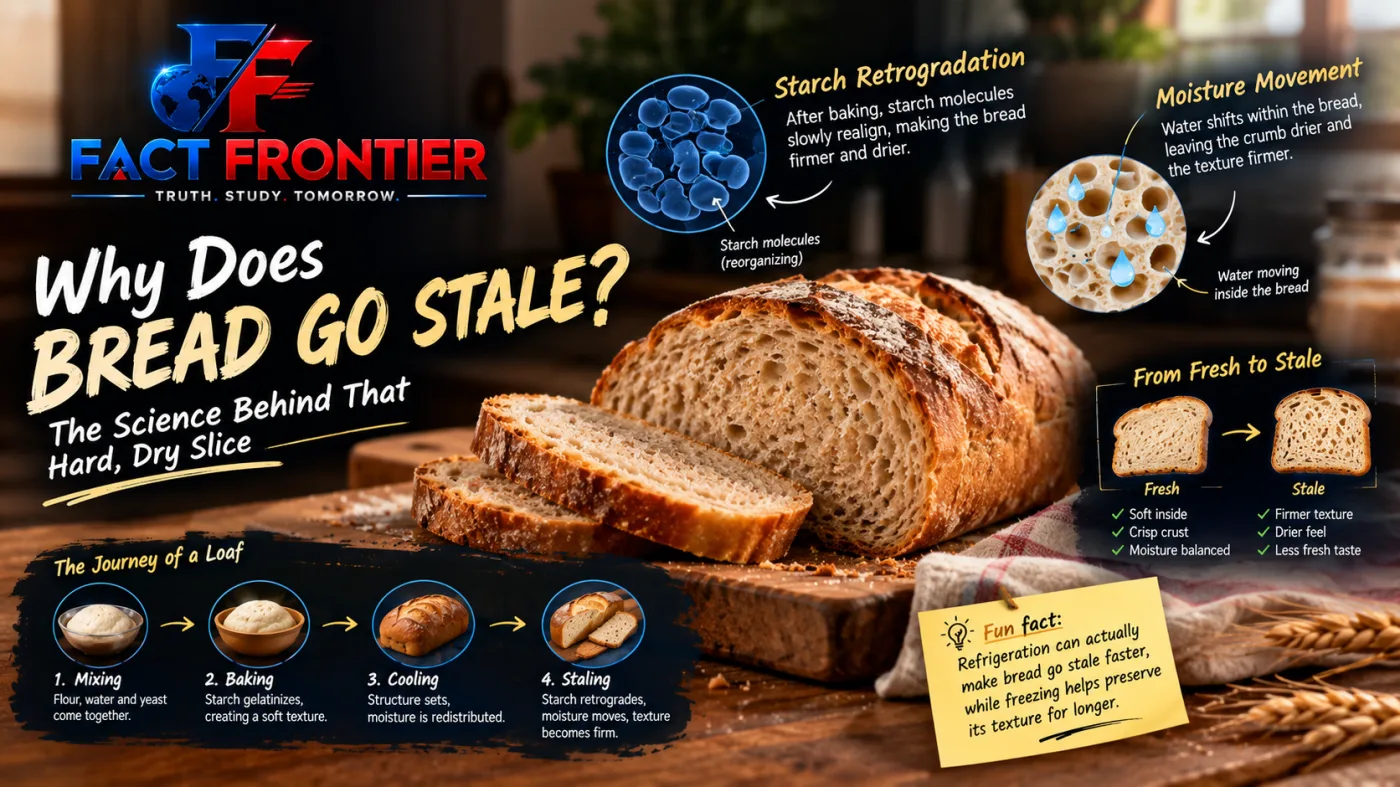
WWhy does bread go stale? It is one of the most common kitchen mysteries. Fresh bread has a very specific feeling—the outside may be slightly crisp, while the inside is soft, warm, and easy to tear apart. But leave that same loaf out for a day or two and everything changes: the crust turns rubbery, the crumb grows firm, and it loses that bakery-fresh charm.
Most people simply call this “stale bread,” but from a scientific perspective, why does bread go stale?
Contrary to popular belief, it isn’t just a matter of the bread losing its water. Complex physical and chemical transformations happen inside the loaf after baking, driven primarily by a process called starch retrogradation.
[Freshly Baked Bread] ──(Cooling & Time)──> [Starch Molecules Recrystallize] ──> [Stale, Firm Bread]
What Happens During Baking? (And Why Does Bread Go Stale Later?)
To understand why does bread go stale, we must first examine what happens inside the oven when the bread is still just dough:
- Starch Granules Swell: Flour is packed with starch made of glucose chains (amylose and amylopectin). In the hot oven, these granules soak up moisture and burst open.
- Gelatinization Takes Place: Heat disrupts the organized starch structure, converting it into a soft, flexible gel.
- Gluten Network Sets: Proteins stretch and set, trapping expanding gases to form the fluffy interior structure (the crumb).
Once the loaf leaves the oven, however, a countdown begins.
What is Starch Retrogradation and Why Does Bread Go Stale?
As the loaf cools to room temperature, those disorganized starch chains begin to align, lock together, and return to a structured, crystalline state. This recrystallization—starch retrogradation—forces the soft interior to harden.
If you want to know why does bread go stale, you must look at how these starch chains move. Over time, parts of the starch become increasingly organized and crystalline. Scientists studying bread storage have repeatedly linked this rise in starch crystallinity directly to crumb firming. This molecular shift is the core reason why does bread go stale and lose its fresh, elastic quality.
So when your loaf becomes hard, it is not simply “drying out.” The structure of the starch itself is changing.
But Where Does the Moisture Go?
But when addressing why does bread go stale, moisture plays an equally critical role. Water does not necessarily leave the bread; rather, it moves:
- Internal Migration: Water molecules shift out of the starch gel and migrate toward the crust.
- Bound vs. Free Moisture: Even if total water content remains largely unchanged, the moisture becomes chemically trapped within the recrystallized starch, leaving it unavailable to soften your palate.
This explains why a slice of bread can still contain a significant amount of water and yet feel dry in your mouth. “How much water is present” and “how that water is held inside the bread” are not the same thing.
For more on how water activity affects baked goods, check out the USDA Food Safety and Inspection Service guide on food properties and storage.
Why Does the Crust Change Too?
While the interior crumb hardens, the crust undergoes the opposite transformation.
During baking, the surface loses moisture and becomes much drier than the interior, creating the familiar brown, crispy crust. After baking, moisture moves from the softer interior toward the crust. Depending on how it is stored, this can cause the crust to lose its original crispness while the interior becomes firmer. You end up with neither the fresh softness of a new loaf nor the crisp crust it had out of the oven.
Why Does Bread Go Stale Faster in the Refrigerator?
Many people assume that putting bread in the refrigerator will keep it fresh because cold temperatures slow down many forms of food spoilage. But bread staling is not controlled by the same process as food spoilage.
This is a surprising paradox of why does bread go stale: refrigerator temperatures actually encourage and speed up starch retrogradation. This explains why does bread go stale so rapidly when chilled compared to being kept at normal room temperature.
Freezing is entirely different. At freezer temperatures, the water turns to ice, and molecular movement halts dramatically. This locks the starch in place and preserves the bread’s texture for much longer. That is why freezing is generally the best long-term storage method.
Why Can Heating Make Stale Bread Seem Fresh Again?
Knowing why does bread go stale also gives us a clue on how to temporarily reverse the process.
If you heat stale bread in an oven or toaster (around 140°F / 60°C), it can temporarily become softer. Heat melts the recrystallized starch structure and allows moisture to move freely through the bread again. However, once it cools down, the retrogradation resumes, and the staling returns—often even faster than before.
Does Every Type of Bread Go Stale at the Same Speed?
No, the rate and exact manner of why does bread go stale varies. Different breads have different ingredients, structures, and water content.
For example, research has found differences in the staling behavior of wheat and rye breads. Sourdough breads can also remain softer for longer because their acidity can slow certain starch changes. This is why two loaves kept in the same kitchen can behave very differently after a few days.
Is Stale Bread Actually “Bad”?
Just because a loaf has gone stale doesn’t mean it’s spoiled. This tells us why does bread go stale without necessarily being unsafe to eat: staling is a physical, molecular change, whereas spoilage is caused by microbes like mold.
As long as there is no visible mold or off-odors, stale bread is completely safe to use. It can be toasted, turned into breadcrumbs, or used in dishes where a firmer texture is helpful, like French toast or croutons. Want to learn how to turn your leftover slices into zero-waste meals? Explore our internal guide on Creative Ways to Use Stale Bread in the Kitchen to get started!
The Surprising Science Inside an Ordinary Loaf
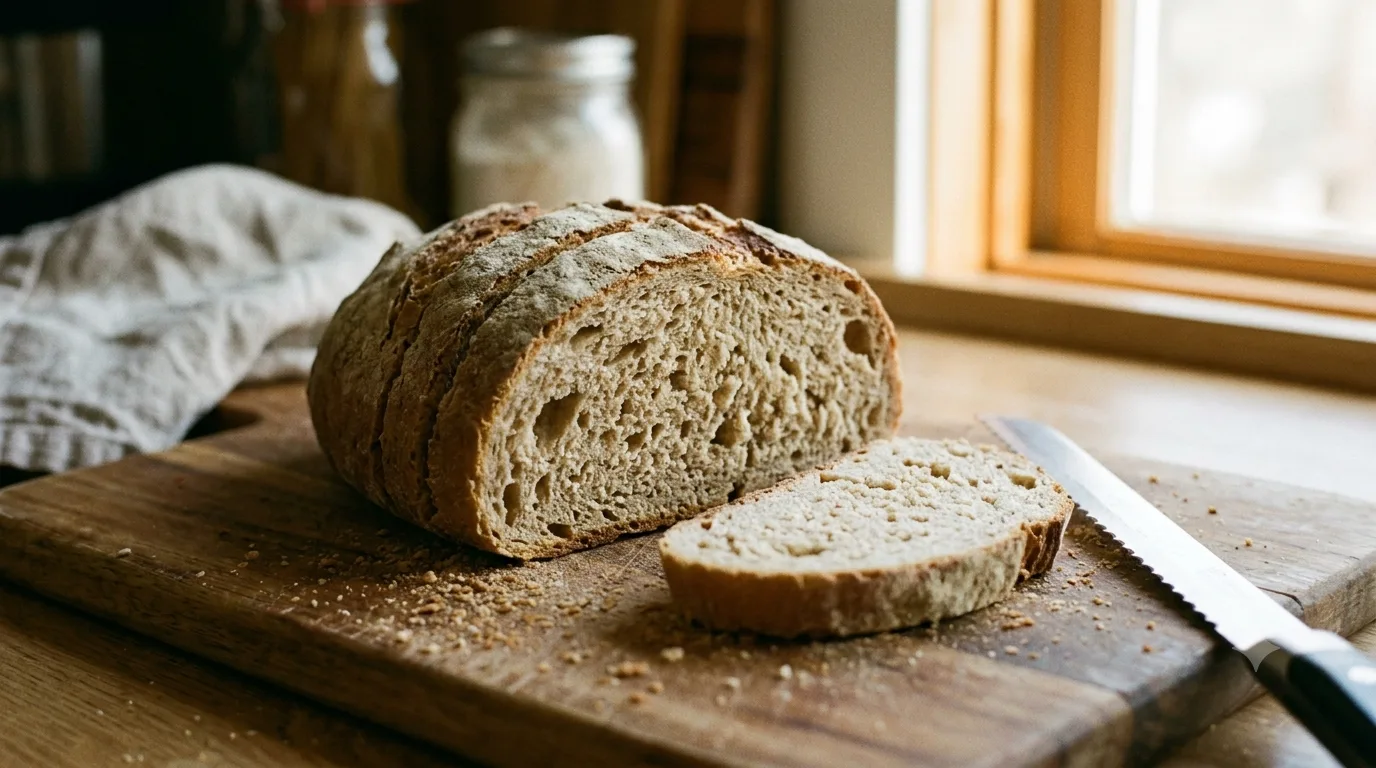
Bread looks simple, but its texture depends on a complicated combination of starch, proteins, water, and heat.
The next time you see a hardening loaf, you won’t just see old food—you’ll understand exactly why does bread go stale. You are watching its molecular structure slowly change, reminding us that even the most everyday foods have incredible science hidden inside them.
Also visit- How Does a QR Code Store So Much Information in Such a Small Square?
📚 Verified Research Sources & Fact-Checking Citations
At FactFrontier, every claim is cross-referenced with primary scientific databases, institutional research archives, and verified historical records:
- Nature & Scientific American Archives: Peer-reviewed science and interdisciplinary research publications.
- Encyclopaedia Britannica & Academic Repositories: Verified historical and encyclopedic reference data.
- Global Scientific Fact-Checking Networks: Primary institutional datasets and peer-reviewed literature.