
WhWhy do cut apples turn brown almost immediately after you slice them? You cut a fresh apple, enjoy a few crisp pieces, and leave the remaining slices sitting on the kitchen counter. At first, the exposed surface looks pale, vibrant, and perfectly fresh. But come back twenty or thirty minutes later, and the surface has transformed, taking on a noticeably dark brown appearance.
It can easily look as if the fruit is suddenly spoiling right in front of your eyes, but this dramatic color change is actually driven by a perfectly normal chemical reaction occurring deep inside the plant tissue. The apple wasn’t suddenly attacked by harmful bacterial organisms from the surrounding environment—the necessary components were inside the fruit’s cells all along. Slicing through the skin simply allowed those internal biological compounds to interact with the outside world.
Understanding Why Do Cut Apples Turn Brown
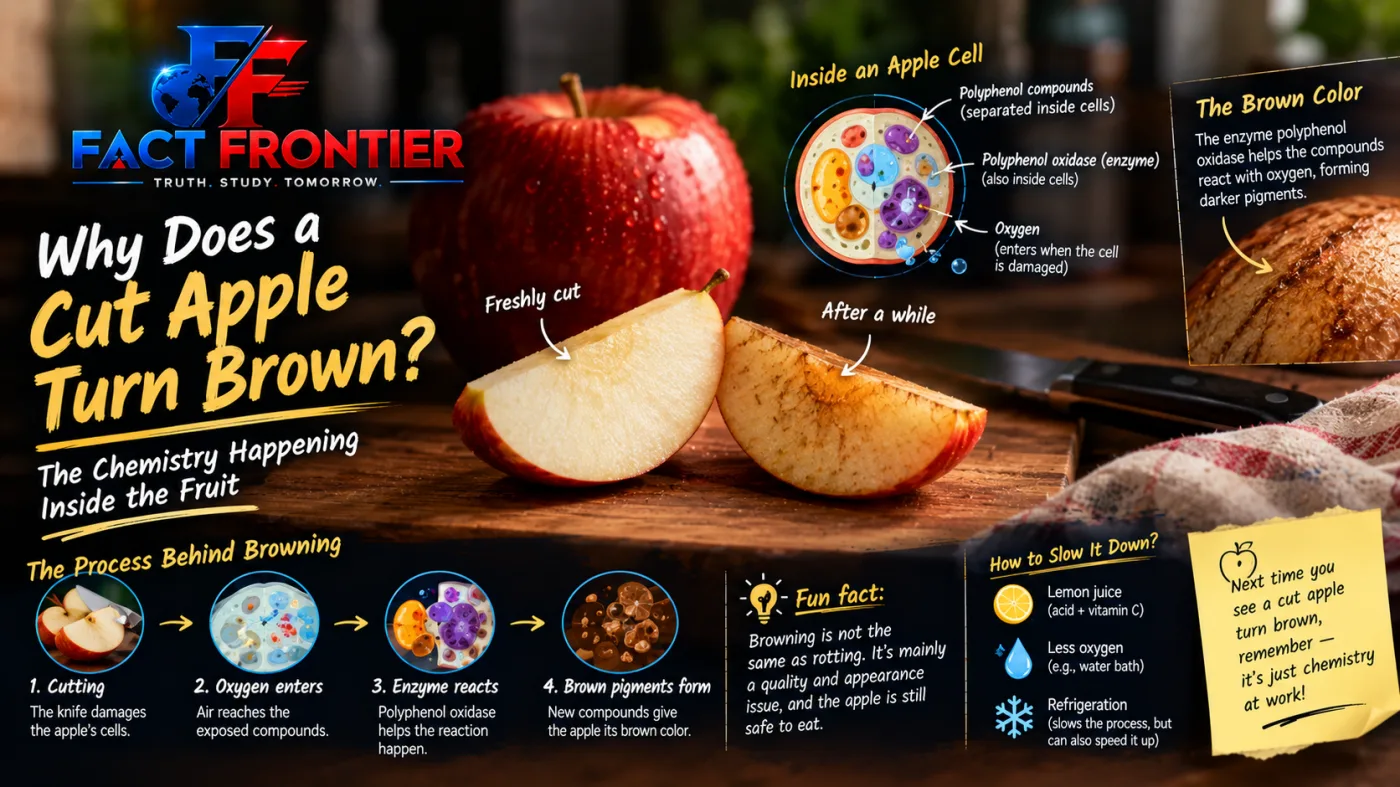
To truly understand why do cut apples turn brown, you have to look closely at the biological structure of fresh produce. An apple is far more complex than it appears on the surface. Inside, it contains millions of microscopic plant cells packed with water, natural sugars, organic acids, enzymes, and specialized plant compounds known as polyphenols.
| Component | Role in the Apple’s Cellular Structure |
| Polyphenols | Naturally occurring chemical compounds stored safely in cellular compartments. |
| Polyphenol Oxidase (PPO) | A specialized enzyme that accelerates reactions between polyphenols and oxygen. |
| Cell Walls & Membranes | Rigid structural barriers that keep enzymes and polyphenols separated in healthy fruit. |
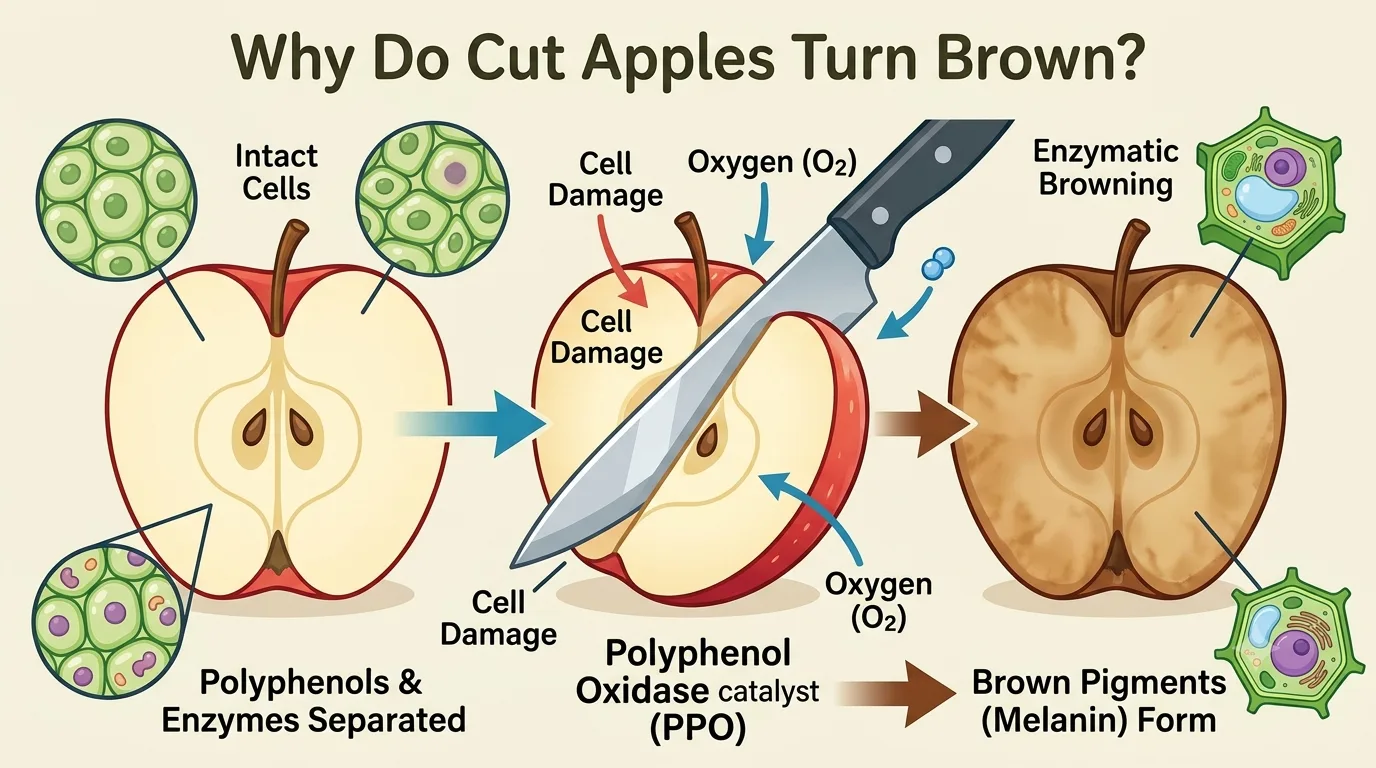
When an apple is intact, these chemical substances remain strictly separated inside different compartments of each individual cell. This spatial barrier prevents spontaneous chemical reactions from taking place. However, the moment you bite into, drop, or slice through the fruit with a kitchen knife, you violently rupture thousands of delicate cell walls. This damage causes their internal contents to spill out and mix together, directly exposing them to atmospheric oxygen. For a broader look at how everyday plant compounds interact with our daily diets, explore our guide on Natural Antioxidants in Household Foods.
The Chemistry Behind Enzymatic Browning
The main chemical driver explaining why do cut apples turn brown so fast is a specialized plant enzyme known as polyphenol oxidase (PPO). In biological terms, enzymes act as natural catalysts, accelerating specific chemical reactions that would otherwise happen extremely slowly. You can explore a detailed scientific breakdown of polyphenol oxidase and cellular structures via the NCBI National Library of Medicine.
When oxygen enters the damaged plant tissue, the PPO enzyme initiates a multi-step chemical reaction:
- Cellular Rupture: A blade or impact breaks open the protective cell walls, releasing trapped cellular fluids.
- Oxygen Infiltration: Atmospheric oxygen rapidly diffuses into the newly exposed moist tissue.
- Enzymatic Catalysis: PPO utilizes available oxygen to transform naturally present polyphenols into highly reactive chemicals called quinones.
- Pigment Polymerization: These quinones spontaneously combine with neighboring amino acids and structural proteins, forming melanin—the dark brown natural pigment responsible for the rusty coloration.
This complex chain reaction is formally known in food science as enzymatic browning. It explains exactly why do cut apples turn brown so rapidly after prep work, transforming a bright slice without the fruit actually decaying or becoming toxic. To learn more about how similar enzymatic triggers affect various foods and bodily functions, check out our guide on How Enzymes Work in Everyday Life.
Why Whole Apples Don’t Turn Brown
If oxygen is constantly in the air around us, why do cut apples turn brown while intact apples stay completely fresh for weeks?
The answer lies in the apple’s protective design. The outer skin, or peel, functions as a tough, waterproof shield that keeps oxygen out and moisture in. Beneath the surface, intact cellular membranes act as microscopic walls, keeping the PPO enzymes in one compartment and the polyphenolic substrates in another.
[Undamaged Cell Structure] ---> Enzymes & Polyphenols Separated ---> Tissue Stays Pale
[Damaged Cell Structure]   ---> Oxygen + PPO + Polyphenols Blend ---> Enzymatic Browning Begins
Because the enzymes and their chemical targets cannot physically touch each other inside a healthy cell, no oxidation can take place. The moment a knife blade breaches this barrier, cellular organization breaks down, and the chemical reaction kicks off immediately.
Is a Browned Apple Safe to Eat?
When people observe why do cut apples turn brown after slicing, their initial reaction is often concern that the fruit has gone bad. However, it is essential to distinguish between natural enzymatic browning and microbial decay:
- Enzymatic Browning: A harmless, chemical reaction triggered solely by enzyme and oxygen contact.
- Microbial Rotting: Biological degradation driven by living microorganisms like mold, yeast, or bacteria, which produces foul odors, soft slimy textures, and toxins.
While a browned apple slice might lose some of its crispness and take on a slightly altered flavor profile, it remains entirely safe for human consumption, provided it hasn’t been left exposed long enough to collect ambient bacteria or mold spores. For official guidelines regarding fruit freshness, safety standards, and proper storage practices, consult the U.S. Department of Agriculture (USDA).
WThe Science of Salt Water Soaks and Honey Baths
Understanding why do cut apples turn brown makes it much easier to prevent the reaction. While lemon juice is a well-known fix, two other household methods work surprisingly well due to unique chemical properties:
- Salt Water Soaks (Sodium Chloride): Soaking cut slices in a mild salt solution (about 1/2 teaspoon of salt per quart of water) disrupts the PPO enzyme. The chloride ions in table salt alter the ionic environment around the enzyme’s active site, preventing it from binding effectively with oxygen and polyphenols.
- Honey Soaks (Peptide Inhibitors): Honey contains naturally occurring peptide compounds that deactivate polyphenol oxidase. Soaking slices for a few minutes in a mixture of warm water and honey delays browning for hours while adding a mild, pleasant sweetness without the sour bite of lemon juice.
How to Prevent Apple Oxidation
Once you understand the fundamental science behind why do cut apples turn brown, delaying or preventing the process in your kitchen becomes straightforward. You simply need to eliminate one of the key ingredients in the reaction: oxygen, active enzymes, or exposed polyphenols.
- Apply Lemon Juice (Acidification): Dousing slices in lemon juice introduces citric acid and ascorbic acid (Vitamin C). Acids lower the surface pH, inactivating the sensitive PPO enzyme, while Vitamin C acts as a sacrificial antioxidant that consumes oxygen before it can react with the fruit.
- Submerge in Cold Water (Oxygen Barrier): Keeping cut slices immersed in plain water creates a physical barrier that prevents surrounding air from touching the delicate cells.
- Blanch Slices (Heat Inactivation): Briefly dipping fruit slices into boiling water heats the plant tissue, permanently deactivating the protein structure of polyphenol oxidase enzymes.
Browning Across Other Foods and Plant Defense
Understanding why do cut apples turn brown also unlocks the mystery behind discoloration in other produce. Bananas, pears, potatoes, avocados, and eggplants all rely on similar polyphenol oxidase pathways. If you have ever left a peeled potato in a bowl or watched a guacamole bowl turn dark, you have witnessed the exact same chemistry at work.
Biologists suggest this process isn’t an accidental flaw, but rather a functional defense mechanism. When an insect, animal, or pathogen damages a plant in nature, the dark melanin pigments and reactive quinones form a tough outer scab. This barrier helps seal the wound, deterring feeding pests and inhibiting foreign bacteria from infiltrating deeper into the healthy plant tissue.
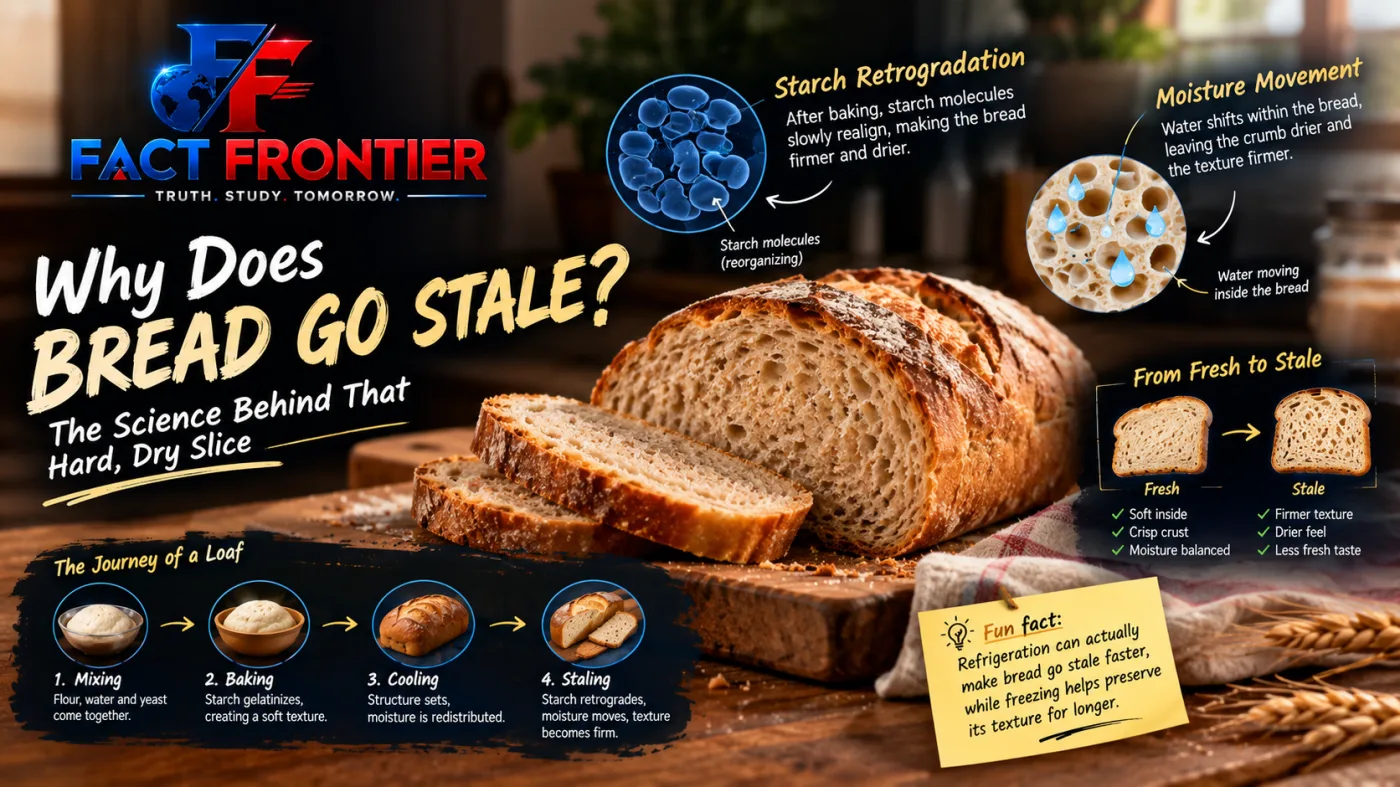
Also read- Why Does Bread Go Stale? The Science Behind That Hard, Dry Slice
📚 Verified Research Sources & Fact-Checking Citations
At FactFrontier, every claim is cross-referenced with primary scientific databases, institutional research archives, and verified historical records:
- Nature & Scientific American Archives: Peer-reviewed science and interdisciplinary research publications.
- Encyclopaedia Britannica & Academic Repositories: Verified historical and encyclopedic reference data.
- Global Scientific Fact-Checking Networks: Primary institutional datasets and peer-reviewed literature.