
What Is World Elephant Day 2026 and Why Is It Important?
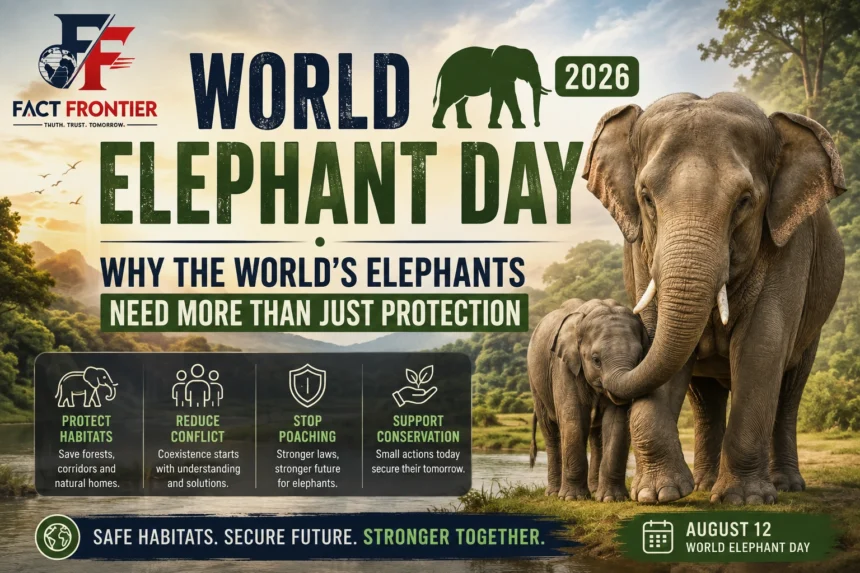
World Elephant Day 2026 is more than an annual celebration of one of the world’s most remarkable animals. Observed on August 12, the day draws attention to the challenges elephants face in the wild, from shrinking habitats and broken wildlife corridors to poaching and human-elephant conflict. Across Africa and Asia, conservation efforts are increasingly focused not only on protecting elephants themselves but also on preserving the landscapes they need to survive.
World Elephant Day, observed on August 12, was established in 2012 to raise global awareness of elephant conservation and the threats they face. The 2026 campaign is again using the day to connect people with conservation efforts around the world, with events ranging from public walks to educational programs and field-based activities.
But the day is not really about celebrating elephants for 24 hours. Its deeper purpose is to ask a difficult question: Can humans and elephants continue to share the same landscape as populations grow, forests shrink and the climate changes?
What Is World Elephant Day?
World Elephant Day is an international awareness campaign dedicated to the protection and conservation of elephants.
It was first officially observed on August 12, 2012. Since then, conservation groups, wildlife organizations, governments, researchers, and communities have used the day to highlight issues such as habitat destruction, illegal ivory trade, poaching, captivity, and human-elephant conflict.
The campaign is particularly important because elephants reproduce slowly. A population cannot quickly recover after losing large numbers of adult animals. Protecting existing herds and the landscapes they depend on is therefore far more effective than trying to rebuild populations after a major decline.
Source – World Elephant Day is observed every year on August 12 to raise awareness about elephant conservation and the threats facing these animals.
There Are Three Living Elephant Species
For a long time, people commonly spoke about “the African elephant” and “the Asian elephant.” Modern taxonomy recognizes three living elephant species:
- African savanna elephant (Loxodonta africana)
- African forest elephant (Loxodonta cyclotis)
- Asian elephant (Elephas maximus)
The distinction between African forest and savanna elephants became particularly important in conservation science. The IUCN lists the African forest elephant as Critically Endangered and the African savanna elephant as Endangered. The Asian elephant is also classified as Endangered.
The Bornean elephant, a population of Asian elephants found on the island of Borneo, was assessed separately by the IUCN as Endangered in 2024.
These classifications are more than labels. They reflect different population trends, threats, and conservation needs.
Why Elephants Matter to an Entire Forest
An elephant is not simply a large animal moving through a forest.
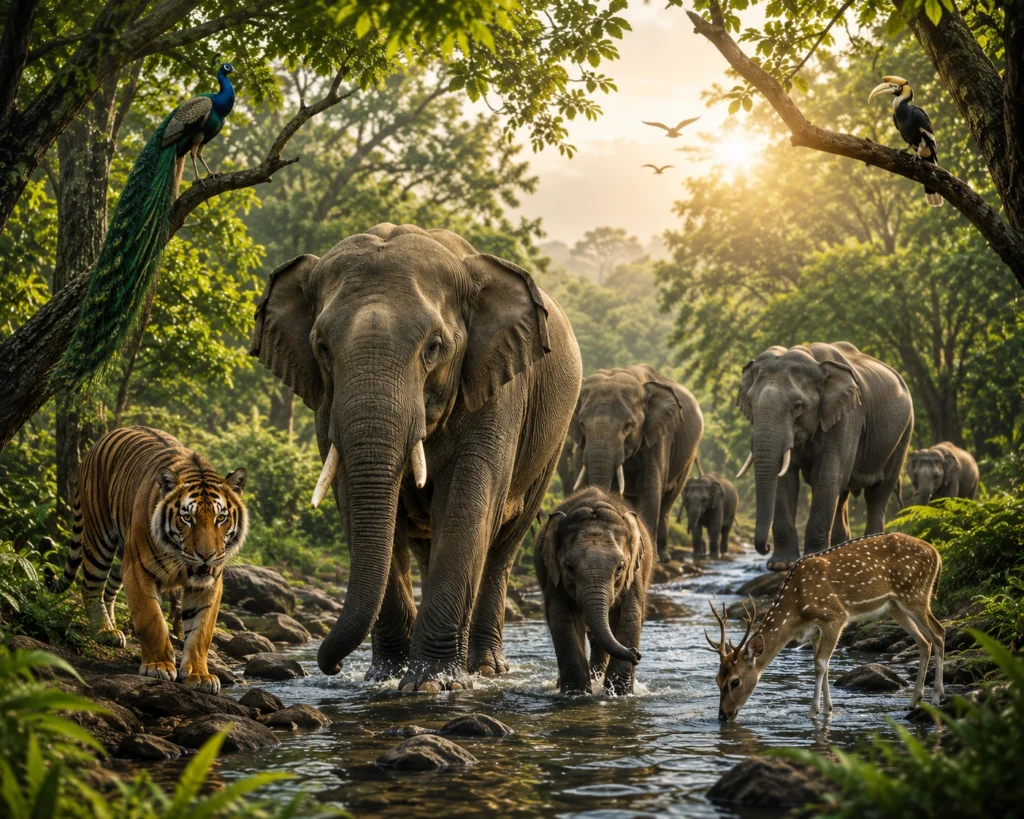
It can change the surrounding forest.
While feeding, elephants break branches, uproot or push over vegetation, and open pathways through dense habitats. Their dung carries seeds and nutrients, helping plants spread across landscapes. Their movement can create openings used by other animals, while their interaction with vegetation influences the structure of forests and grasslands.
This is why conservation scientists often describe elephants as ecosystem engineers.
India’s Ministry of Environment, Forest and Climate Change also describes elephants as playing important roles in seed dispersal, nutrient cycling and shaping forest communities. Their habitats can also support broader biodiversity and watershed functions.
Protecting elephants, therefore, is rarely just about protecting one species. It can mean protecting an entire ecological network.
Source – In India, Project Elephant supports habitat protection, elephant corridors and measures aimed at reducing human-elephant conflict.
The Biggest Problem Is Often Not the Elephant
One of the most complicated challenges facing elephants today is loss and fragmentation of habitat.
An elephant herd needs considerably more space than many other terrestrial animals. But forests are increasingly divided by roads, railway lines, farms, mines, settlements, industrial projects and other infrastructure.
A forest may still appear green on a satellite image, yet a road or settlement cutting through it can prevent elephants from moving between important feeding, breeding and water areas.
This is where wildlife corridors become crucial.
A corridor is essentially a route that connects separated habitats. For elephants, these routes can allow herds to move between forest patches and seasonal resources.
India’s official Elephant Corridors of India 2023 report describes corridors as important for maintaining connectivity, dispersal, seasonal movement and gene flow. It also notes that maintaining connectivity can help reduce human-elephant conflict in landscapes dominated by people.
Human-Elephant Conflict: A Problem Without Easy Answers
When elephant habitat becomes fragmented, elephants do not suddenly stop needing food and water.
They may enter farms, plantations or villages.
For farmers, an elephant herd moving through a field can mean damaged crops and lost income. For elephants, contact with people can result in injury, retaliation or death.
This creates one of conservation’s most difficult situations because both sides have legitimate needs.
Simply moving elephants away from villages does not solve the underlying problem if their traditional movement routes remain blocked.
Effective approaches can include:
- Protecting and restoring elephant corridors
- Improving early-warning systems
- Supporting communities facing crop damage
- Designing roads and railways with wildlife movement in mind
- Improving land-use planning
- Using local knowledge alongside scientific monitoring
- Responding quickly when elephants enter populated areas
The goal is not to create a world where humans never encounter elephants. In many parts of Asia, that is unrealistic. The goal is to make those encounters safer.
Source – The conservation status of elephant species is assessed internationally through the IUCN Red List, which tracks the risks faced by threatened wildlife.
Poaching and the Ivory Trade Still Matter
Habitat loss is not the only threat.
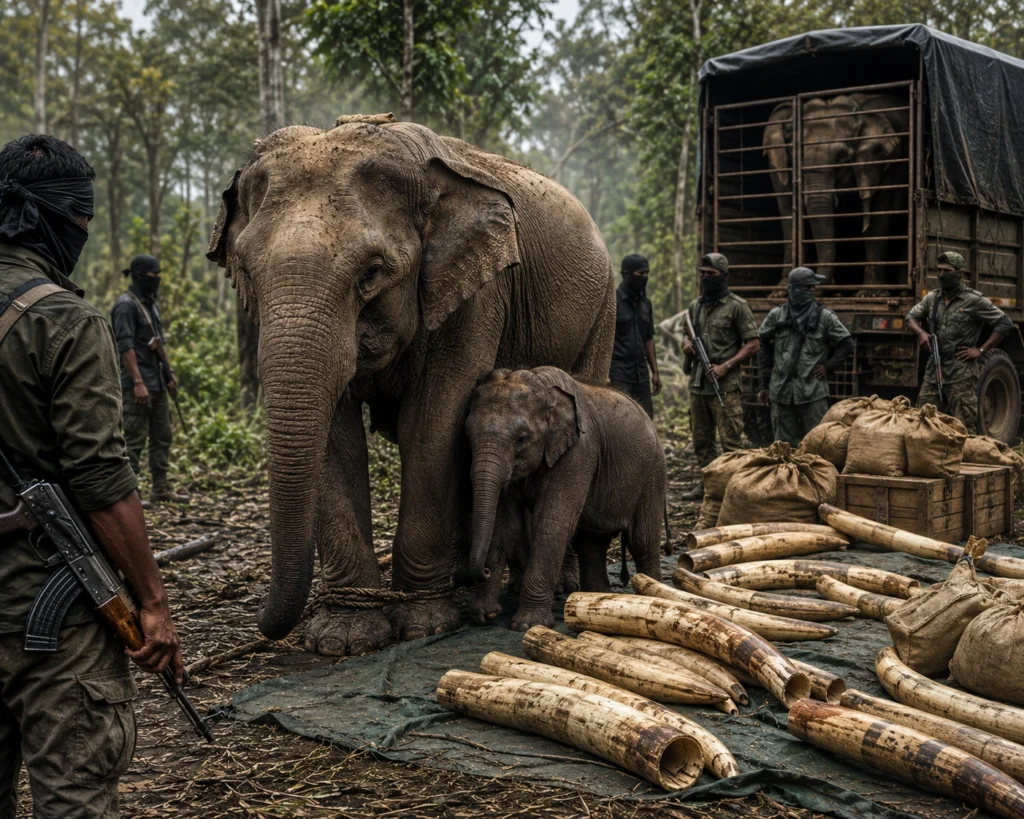
Elephants have also been hunted for their ivory, particularly during periods of intense illegal demand. Poaching can remove breeding adults and disrupt the social structure of herds.
Conservation efforts, stronger law enforcement and international controls have helped in some areas, but illegal wildlife trafficking remains a concern.
The African forest elephant has suffered especially severe historical declines. A recent IUCN assessment published in 2025 used DNA-based methods to improve population estimates. It estimated about 135,690 African forest elephants in surveyed areas, with an additional 7,728–10,990 estimated in areas where systematic surveys were incomplete. The researchers emphasized that the revised numbers partly reflect better survey methods, not a sudden increase in the elephant population.
That distinction matters. Better counting can make a population appear larger on paper without meaning that more animals actually exist.
What About Asian Elephants?
The Asian elephant’s situation is particularly important for countries such as India, Sri Lanka, Thailand, Myanmar and several other Asian nations.
The WWF currently estimates that fewer than 52,000 Asian elephants remain in the wild.
India holds a major share of the world’s remaining wild Asian elephants. India’s Ministry of Environment says that more than 60% of the world’s wild Asian elephant population occurs within India, although population estimates vary by survey year and methodology.
India launched Project Elephant in 1991–92 to support elephant conservation, habitat and corridor protection, and efforts to address human-elephant conflict. The current government program operates across 22 states and union territories.
For India, elephant conservation is therefore not a small wildlife issue. It is a major landscape-management challenge.
World Elephant Day 2026: What Is Happening Now?
This year’s World Elephant Day comes with several conservation developments worth watching.
The official World Elephant Day website lists events taking place around the world from August 9–16, including virtual walks, educational programs and conservation activities. One initiative focuses specifically on Asian elephants, while other events connect people with elephant sanctuaries and field conservation.
Sri Lanka has also announced a significant development just before World Elephant Day 2026. The country’s authorities have gazetted new elephant corridors as part of efforts to reduce human-elephant conflict and improve movement between habitats. The initiative is being presented as part of a longer-term strategy rather than a temporary response.
The issue is also receiving renewed attention elsewhere in Asia. Conservationists in Bangladesh are calling for restoration of degraded forests and stronger protection of elephant corridors, while reports from Nigeria have highlighted the vulnerability of the country’s remaining wild elephants to habitat loss, ivory trafficking and conflict with people.
These examples point to a common pattern: elephant conservation is increasingly becoming a question of landscape planning and coexistence, not simply anti-poaching patrols.
Climate Change Adds Another Layer
Climate change is making the situation more complicated.
Elephants need regular access to water and food. Changes in rainfall, longer dry periods, extreme heat, and altered vegetation can affect where those resources are available.
During difficult seasons, elephants may travel farther in search of water or food. That can bring them closer to farms and settlements.
The connection between climate change and elephant conservation is still an active area of research, and it would be misleading to attribute every conflict or population change directly to global warming. Habitat fragmentation, land-use change, poaching and human population growth remain major drivers.
But climate change can add pressure to an already stressed landscape.
Source – Conservation organizations such as WWF work on protecting elephant habitats and addressing threats such as poaching and habitat loss.
Why Elephant Corridors May Be the Future of Conservation
For decades, conservation often focused on protected areas drawn on maps.
Protected areas remain essential, but elephants frequently move beyond their boundaries.
A national park cannot help much if an elephant’s seasonal route to water crosses a highway or a village.
That is why the future of elephant conservation may depend increasingly on connected landscapes.
India’s corridor research makes this point clearly: elephants need movement between habitat patches for seasonal migration, dispersal and genetic exchange.
The same principle applies elsewhere in Asia and Africa.
Conservation may therefore increasingly involve cooperation between forest departments, farmers, local communities, transport authorities, researchers and governments.
What Can Ordinary People Do?
World Elephant Day does not require everyone to become a wildlife activist.
Small choices can still matter.
People can:
- Avoid products made from illegal wildlife materials.
- Support credible conservation organizations.
- Learn where elephant populations live and what threats they face.
- Avoid sharing sensational or misleading wildlife videos.
- Support responsible tourism that does not exploit elephants.
- Encourage governments to consider wildlife corridors in infrastructure planning.
- Help spread scientifically accurate information about elephants.
For people living near elephant habitats, supporting community-based conflict prevention can be especially valuable.
The Real Meaning of World Elephant Day
It is easy to look at an elephant and see only its size.
But the animal’s real importance is much larger.
An elephant herd carries knowledge across generations—where water can be found, when food becomes available, and which routes are safe. When old animals disappear, that knowledge can disappear with them.
At the same time, an elephant landscape is also a human landscape. Millions of people live around the forests, farms and corridors through which elephants move.
That is why the future of elephants cannot be separated from the future of the people who share their habitat.
World Elephant Day is ultimately not about choosing elephants over people. It is about finding ways for both to survive.
The challenge is enormous, but conservation is not without results. Better monitoring, protected areas, corridor restoration, stronger laws and community participation are already changing outcomes in some regions.
The next step is to make those successes large enough—and connected enough—to give elephants room to remain wild.
And perhaps that is the most useful message for World Elephant Day 2026: saving elephants does not begin with keeping them somewhere far away from us. It begins with learning how to share the landscapes we both call home.
Frequently Asked Questions (FAQs)
1. What is World Elephant Day 2026?
World Elephant Day 2026 will be observed on August 12 to raise awareness about elephant conservation, habitat loss, poaching, illegal ivory trade and human-elephant conflict.
2. When is World Elephant Day celebrated?
World Elephant Day is celebrated every year on August 12. The international campaign was officially launched in 2012.
3. Why is World Elephant Day important?
The day draws attention to the challenges faced by elephants and encourages governments, conservation organizations and communities to work toward protecting elephants and their natural habitats.
4. How many species of elephants are there?
There are three recognized living elephant species: the African savanna elephant, African forest elephant and Asian elephant.
5. Why are elephants endangered?
Elephants face several threats, including habitat loss, habitat fragmentation, poaching, illegal ivory trade and human-elephant conflict. The severity of these threats varies across regions and species.
6. What is human-elephant conflict?
Human-elephant conflict occurs when elephants and people come into close contact, often because forests and traditional elephant movement routes have been fragmented. Elephants may enter farms or settlements, while people can face crop damage and safety risks.
7. Why are elephant corridors important?
Elephant corridors connect separated forest habitats and allow elephants to move between feeding, breeding and water sources. Maintaining these routes can also help reduce encounters between elephants and people.
8. How does poaching affect elephants?
Poaching, particularly for ivory, can remove adult elephants from populations and disrupt the social structure of herds. Strong law enforcement and international action against illegal wildlife trafficking remain important conservation measures.
Conclusion
World Elephant Day 2026 is a reminder that saving elephants means protecting much more than a single species. Habitat loss, fragmented forests, poaching and human-elephant conflict continue to put pressure on populations across Africa and Asia. Protecting wildlife corridors, restoring habitats and involving local communities can give elephants a better chance to survive in the landscapes they have occupied for generations.
The future of elephants will ultimately depend on how well people learn to share space with them. Conservation cannot succeed through protected areas and anti-poaching efforts alone; it also requires responsible development, scientific research and cooperation with communities living alongside elephant habitats. On this World Elephant Day, the most meaningful step is not simply to admire these remarkable animals, but to help ensure that wild elephants still have forests, corridors and safe landscapes to call home.
Also Read: – Super El Niño: The Climate Phenomenon That Can Reshape Weather Across the Globe
📚 Verified Research Sources & Fact-Checking Citations
At FactFrontier, every claim is cross-referenced with primary scientific databases, institutional research archives, and verified historical records:
- IUCN Red List of Threatened Species: Global species conservation assessments and population surveys.
- Wildlife Institute of India (WII) & Project Tiger: Field census data and ecological habitat monitoring.
- National Geographic & Zoological Society Research: Ethological observations and biodiversity metrics.