
Digital Connection, Real Emotions और बदलती Human Relationships की कहानी
Social Media and Relationships in Hindi: बदलते डिजिटल दौर में इंसानी रिश्तों के मायने पूरी तरह बदल चुके हैं। कुछ साल पहले किसी दोस्त से बात करने के लिए फोन करना पड़ता था। उससे पहले शायद चिट्ठी लिखनी पड़ती। आज एक “Hi”, heart emoji या Instagram story reply कुछ ही सेकंड में हजारों किलोमीटर की दूरी मिटा सकता है। यही Social Media की सबसे बड़ी ताकत है—इसने communication को तेज, आसान और लगभग हमेशा available बना दिया है।
लेकिन कहानी का दूसरा हिस्सा भी है। हम पहले से ज्यादा लोगों से जुड़े हुए हैं, फिर भी कई लोग loneliness और emotional disconnection का अनुभव करते हैं। World Health Organization की 2025 Commission on Social Connection के अनुसार दुनिया में लगभग हर छह में से एक व्यक्ति loneliness का अनुभव करता है। WHO यह भी स्पष्ट करता है कि social connection केवल लोगों की संख्या पर नहीं, बल्कि relationships की quality, support और interaction पर भी निर्भर करती है। (World Health Organization)
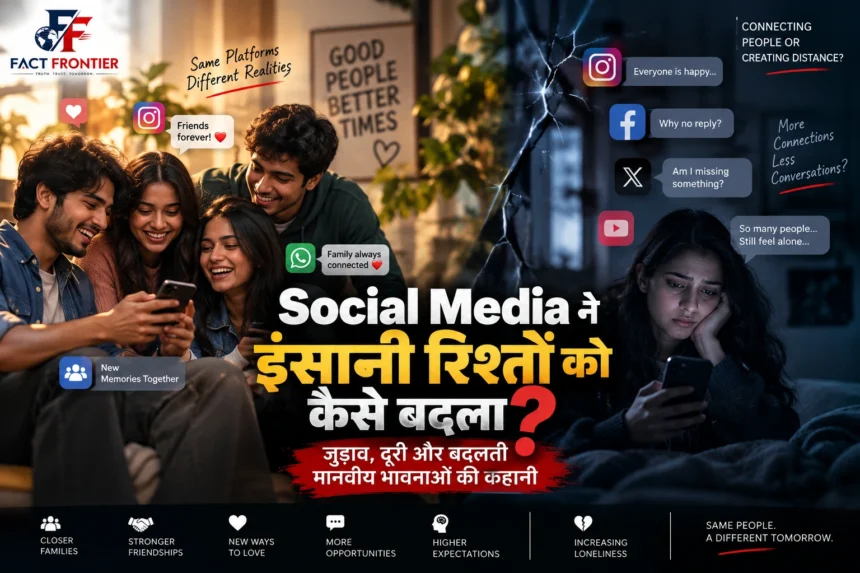
तो आखिर Social Media ने हमारे रिश्तों को मजबूत किया है या कमजोर? इसका जवाब इतना simple नहीं है। Social media ने relationships को खत्म नहीं किया; उसने उनके तरीके, speed, expectations और boundaries बदल दिए हैं।
भारत में Social Media अब केवल Entertainment नहीं रहा
India में digital communication का scale समझना जरूरी है। DataReportal के Digital 2026: India report के अनुसार, October 2025 में भारत में लगभग 1.03 billion internet users और करीब 500 million social media user identities दर्ज की गईं। Instagram के लिए लगभग 481 million और Facebook के लिए लगभग 403 million advertising-reach users reported थे। ये figures unique individuals के exact counts नहीं हैं, लेकिन digital platforms की विशाल reach जरूर दिखाते हैं। (DataReportal – Global Digital Insights)
इसका सीधा असर family, friendship, dating, professional networking और even neighbourhood relationships पर पड़ा है।
आज किसी रिश्तेदार का birthday याद रखने के लिए calendar की जरूरत नहीं—Facebook notification या WhatsApp status याद दिला देता है। कोई दोस्त दूसरे शहर में हो, तो daily life की छोटी-छोटी बातें photos, voice notes और video calls के जरिए share की जा सकती हैं।
Distance कम हुई है, लेकिन relationship की nature बदल गई है।
1. Long-Distance Relationships अब ज्यादा Connected हैं
Social media का सबसे obvious positive effect है distance को manageable बनाना।
पहले किसी दूसरे शहर या देश में रहने वाले परिवार के सदस्य से बातचीत एक planned activity हो सकती थी। अब WhatsApp, Instagram, Messenger, video calls और voice messages ने communication को continuous बना दिया है।
किसी मां को अपने दूसरे शहर में पढ़ रहे बच्चे की फोटो तुरंत मिल सकती है। विदेश में रहने वाला दोस्त group call में birthday celebration का हिस्सा बन सकता है। Grandparents भी family groups के माध्यम से grandchildren की everyday life देख सकते हैं।
यह केवल information sharing नहीं है। रोजमर्रा की छोटी updates—“आज क्या खाया”, “office कैसा था”, “यह जगह देखो”—relationships में presence का feeling पैदा कर सकती हैं।
WHO की definition भी social connection को केवल face-to-face interaction तक सीमित नहीं करती; online interaction भी connection का हिस्सा हो सकता है। (World Health Organization)
2. Friendship का Meaning बदल गया
पहले friendship largely physical proximity पर depend करती थी—school, college, neighbourhood या workplace।
अब एक व्यक्ति के friends कई layers में हो सकते हैं:
School friends + college friends + gaming friends + Instagram followers + professional contacts + online communities.
इससे social circle बड़ा हुआ है। लेकिन यहां एक important distinction है—followers और friends एक ही चीज नहीं हैं।
किसी व्यक्ति के हजारों followers हो सकते हैं, लेकिन emotional support देने वाले close friends बहुत कम हो सकते हैं।
2025 के Pew Research Center survey में अमेरिकी teenagers ने social media के impact को अलग-अलग areas में अलग-अलग बताया। Friendships के मामले में 30% teens ने कहा कि social media ने उनकी friendships को help किया, जबकि 7% ने कहा कि उसने harm किया; 43% ने इसे neither help nor harm बताया। (Pew Research Center)
यानी social media friendship को automatically बेहतर या खराब नहीं करता। Use का तरीका ज्यादा महत्वपूर्ण है।
3. “Seen” और “Reply” ने नई Emotional Expectations पैदा कर दीं
Digital relationships का एक नया psychological pressure है—instant response expectation।
अगर किसी ने message देखा लेकिन reply नहीं किया, तो दिमाग तुरंत सवाल बनाने लगता है:
“उसने reply क्यों नहीं किया?”
“क्या वह नाराज है?”
“Online होकर भी मुझे ignore क्यों कर रहा है?”
पहले silence simply silence था। अब “last seen”, “read receipt”, active status और typing indicator जैसी features silence को measurable बना देते हैं।
Relationship में इससे unnecessary assumptions पैदा हो सकती हैं।
एक व्यक्ति busy हो सकता है, लेकिन दूसरे को उसका delayed reply rejection जैसा महसूस हो सकता है।
यानी technology ने communication को faster बनाया, लेकिन कई situations में patience की आवश्यकता भी कम कर दी।
4. Social Media ने “Relationship Visibility” बढ़ा दी
आज relationship private होने के बावजूद उसका digital footprint दिखाई दे सकता है।
Birthday posts, couple photos, anniversary stories, vacation reels और public comments ने relationships को एक तरह की social visibility दे दी है।
यह कभी-कभी positive भी होता है। लोग अपने relationships celebrate करते हैं और memories preserve करते हैं।
लेकिन problem तब शुरू होती है जब relationship की quality और relationship की online appearance अलग हो जाती है।
एक couple Instagram पर perfect दिख सकता है, जबकि वास्तविक जीवन में communication problems हो सकती हैं।
Social media हमें relationship का highlight reel दिखाता है, पूरी कहानी नहीं।
5. Comparison ने Relationships पर नया Pressure डाला
Social media पर हम दूसरों के जीवन के selected moments देखते हैं।
किसी दोस्त की vacation।
किसी की शादी।
किसी का expensive gift।
किसी का perfect relationship।
किसी की engagement।
फिर अनजाने में comparison शुरू हो जाता है।
“सबकी life इतनी अच्छी है, मेरी क्यों नहीं?”
यह comparison friendship और romantic relationships दोनों को प्रभावित कर सकता है। खासकर तब, जब online content को वास्तविक जीवन का complete picture मान लिया जाए।
U.S. Surgeon General की advisory ने youth के संदर्भ में social media के potential benefits और risks दोनों पर जोर दिया है और कहा है कि evidence अभी इतना complete नहीं है कि social media को adolescents के लिए पूरी तरह safe माना जा सके। (HHS.gov)
इसलिए समस्या केवल “social media use” नहीं, बल्कि content, context, frequency और individual vulnerability से भी जुड़ी है।
6. Family Relationships में आया एक बड़ा बदलाव
पहले family conversation अक्सर dining table, courtyard या evening gathering में होती थी।
अब एक ही घर में बैठे चार लोग कभी-कभी चार अलग screens पर होते हैं।
यह phenomenon केवल social media की वजह से नहीं है—streaming, gaming, messaging और smartphones भी इसमें शामिल हैं। लेकिन social platforms ने attention competition को बहुत बढ़ाया है।
एक interesting situation देखिए:
मां बात कर रही हैं।
बेटा Instagram स्क्रॉल कर रहा है।
पिता WhatsApp देख रहे हैं।
दादी TV देख रही हैं।
सभी physically together हैं, लेकिन mentally अलग-अलग digital spaces में मौजूद हैं।
इसे समझने के लिए WHO का social connection framework उपयोगी है—social connection में केवल interaction की संख्या नहीं, बल्कि उसकी quality भी महत्वपूर्ण है। (World Health Organization)
7. लेकिन Social Media ने कई लोगों को अकेलेपन से बाहर भी निकाला
यह बात equally important है।
हर online interaction superficial नहीं होता।
किसी छोटे शहर का student अपने interest से जुड़ा community group पा सकता है। कोई rare hobby वाला व्यक्ति दुनिया के दूसरे हिस्से में समान interests वाले लोगों से जुड़ सकता है। Disability या social isolation का सामना कर रहे लोग online communities के माध्यम से support networks बना सकते हैं।
U.S. Surgeon General की advisory भी social media के संभावित benefits में connection, self-expression और कुछ marginalized युवाओं के लिए identity-affirming communities जैसी चीजों को शामिल करती है। (HHS.gov)
इसलिए “online friendship fake होती है” कहना भी उतना ही गलत होगा जितना यह कहना कि हर online friendship real-life friendship के बराबर होती है।
Human connection medium से नहीं, relationship की quality से तय होता है।
8. Romantic Relationships सबसे ज्यादा क्यों बदले?
Dating और romantic relationships में social media ने शायद सबसे बड़ा behavioural change पैदा किया है।
अब relationship केवल दो लोगों के बीच private interaction नहीं रहता। Social media indirectly तीसरे elements भी जोड़ देता है—followers, comments, likes, ex-partners, DMs और public visibility.
किसी पुराने partner की profile देखना, किसी stranger का message आना या partner की किसी post पर specific person की repeated comments—ये सब relationship में नए questions पैदा कर सकते हैं।
दूसरी तरफ couples के लिए shared photos, memories, video calls और everyday communication relationship को maintain करने में मदद भी कर सकते हैं।
इसलिए social media romantic relationship का cause नहीं, amplifier बन सकता है—अच्छी communication हो तो connection बढ़ सकता है; trust कमजोर हो तो insecurity भी बढ़ सकती है।
9. Social Media ने “Always Available” Culture बनाया
Technology ने एक नया expectation पैदा किया है—आप कभी भी reachable हैं।
Office message रात में।
Friend का DM सुबह।
Family group में लगातार notifications।
Instagram reels के बीच personal messages।
इस constant availability से relationship maintenance आसान होती है, लेकिन boundaries मुश्किल।
हर message का तुरंत जवाब देना जरूरी नहीं है। फिर भी digital culture में delayed response कई बार personal rejection जैसा interpret किया जाता है।
Healthy relationships के लिए अब एक नई skill जरूरी हो गई है:
Digital boundaries.
कब online रहना है, कब phone side में रखना है और कब सामने बैठे व्यक्ति को screen से ज्यादा attention देना है—ये modern relationship skills बन चुकी हैं।
10. क्या Social Media हमें ज्यादा Connected या ज्यादा Lonely बना रहा है?
यही सबसे difficult question है।
Science का answer अभी simple “yes” या “no” नहीं है।
WHO की 2025 की रिपोर्ट बताती है कि loneliness एक global issue है और social connection की quality, support और meaningful interaction महत्वपूर्ण हैं। (World Health Organization)
दूसरी ओर, social media कुछ लोगों को communities, information और emotional support तक पहुंच देता है।
इसलिए ज्यादा accurate conclusion यह है:
Social Media connection को create भी कर सकता है और connection की कमी को छिपा भी सकता है।
एक व्यक्ति पूरे दिन online रह सकता है और फिर भी emotionally lonely महसूस कर सकता है।
और कोई दूसरा व्यक्ति social media का उपयोग केवल उन लोगों से जुड़े रहने के लिए कर सकता है जो उसके लिए वास्तव में महत्वपूर्ण हैं।
Future of Relationships: Human Touch की Value और बढ़ेगी

जैसे-जैसे AI, social platforms, virtual spaces और digital communication आगे बढ़ेंगे, communication और आसान होगा। लेकिन शायद इसी वजह से real human presence की value और बढ़ेगी।
एक emoji “I care” कह सकता है, लेकिन किसी परेशान दोस्त के पास बैठना अलग experience है।
एक video call family को जोड़ सकती है, लेकिन साथ खाना खाने का अनुभव अलग है।
एक comment खुशी दे सकता है, लेकिन किसी से genuinely पूछना—“तुम सच में कैसे हो?”—उससे कहीं ज्यादा meaningful हो सकता है।
Technology relationship का replacement नहीं है। वह एक tool है।
Conclusion: रिश्ते बदले हैं, इंसानी जरूरत नहीं
Social Media ने हमारे रिश्तों को खत्म नहीं किया। उसने relationship की language बदल दी है।
अब friendship में memes हैं, family में WhatsApp groups हैं, romance में DMs हैं, long-distance relationships में video calls हैं और professional relationships में LinkedIn connections हैं।
लेकिन इसके साथ comparison, digital pressure, privacy issues, misunderstanding और attention problems भी आए हैं।
2026 की दुनिया में शायद सबसे जरूरी सवाल यह नहीं है कि “Social Media अच्छा है या बुरा?”
बेहतर सवाल है:
क्या हम Social Media को अपने रिश्तों की मदद के लिए इस्तेमाल कर रहे हैं, या अपने रिश्तों की जगह इस्तेमाल कर रहे हैं?”
क्योंकि अंत में technology कितनी भी advanced क्यों न हो जाए, इंसान को सिर्फ connection नहीं चाहिए—उसे meaningful connection चाहिए।
और शायद यही modern relationships की सबसे बड़ी चुनौती है:
Online रहकर connected दिखना आसान है; सच में connected रहना अभी भी इंसानी काम है।
अक्सर पूछे जाने वाले प्रश्न (FAQs)
Q1. सोशल मीडिया हमारे रिश्तों को कैसे प्रभावित कर रहा है?
उत्तर: सोशल मीडिया ने बातचीत को तेज और आसान बना दिया है, जिससे दूर रहने वाले लोगों से जुड़ना सरल हुआ है। हालांकि, इसने तुलना (comparison), ‘seen’ और ‘instant reply’ का मानसिक दबाव और आमने-सामने की बातचीत में कमी जैसी चुनौतियां भी पैदा की हैं।
Q2. क्या सोशल मीडिया की वजह से अकेलापन (Loneliness) बढ़ रहा है?
उत्तर: हां, कई अध्ययनों के अनुसार स्क्रीन पर ज्यादा समय बिताने और केवल सतही (superficial) लाइक्स या कमेंट्स पर निर्भर रहने से लोग भावनात्मक रूप से अकेला महसूस करने लगते हैं। डिजिटल कनेक्शन वास्तविक भावनात्मक जुड़ाव की पूरी तरह जगह नहीं ले सकता।
Q3. सोशल मीडिया पर ‘Seen’ या ‘Late Reply’ से रिश्तों में गलतफहमी क्यों होती है?
उत्तर: लास्ट सीन और रीड रिसीट्स जैसी सुविधाओं ने तुरंत जवाब पाने की उम्मीद बढ़ा दी है। जब कोई तुरंत जवाब नहीं देता, तो लोग अक्सर इसे व्यक्तिगत अनदेखी या नाराजगी मान लेते हैं, जिससे रिश्तों में बेवजह तनाव और अविश्वास पैदा होता है।
Q4. रिश्तों को सोशल मीडिया के नकारात्मक असर से कैसे बचाएं?
उत्तर: इसके लिए डिजिटल बाउंड्रीज तय करें—जैसे परिवार या पार्टनर के साथ बैठते समय फोन अलग रखना, देर रात तक लगातार चैटिंग से बचना, दूसरों की पोस्ट से अपने जीवन की तुलना न करना और महत्वपूर्ण बातों को मैसेज की जगह कॉल या मिलकर सुलझाना।
Q5. क्या ऑनलाइन बनी दोस्ती वास्तविक जीवन की दोस्ती जितनी मजबूत हो सकती है?
उत्तर: हां, समान रुचियों या सपोर्ट ग्रुप्स के जरिए ऑनलाइन मजबूत रिश्ते बन सकते हैं। रिश्ते की मजबूती माध्यम से नहीं, बल्कि उसमें मौजूद विश्वास, समय और भावनात्मक सहयोग की गुणवत्ता (quality) से तय होती है।
Also Read: – Smartphone की कहानी: कैसे एक छोटा Device बन गया हमारी जिंदगी का सबसे बड़ा साथी?
Artificial Intelligence कैसे सीखता है? Data से Decision तक का सफर
📚 Verified Research Sources & Fact-Checking Citations
At FactFrontier, every claim is cross-referenced with primary scientific databases, institutional research archives, and verified historical records:
- IEEE Xplore Digital Library: Peer-reviewed computing, telecommunications, and sensor architectures.
- ACM (Association for Computing Machinery): Foundational computer science and network engineering archives.
- MIT Technology Review & Standards Laboratories: Emerging hardware and software benchmark assessments.