
The Mechanics of Modern Trade: Moving Goods, Capital, and Ideas.
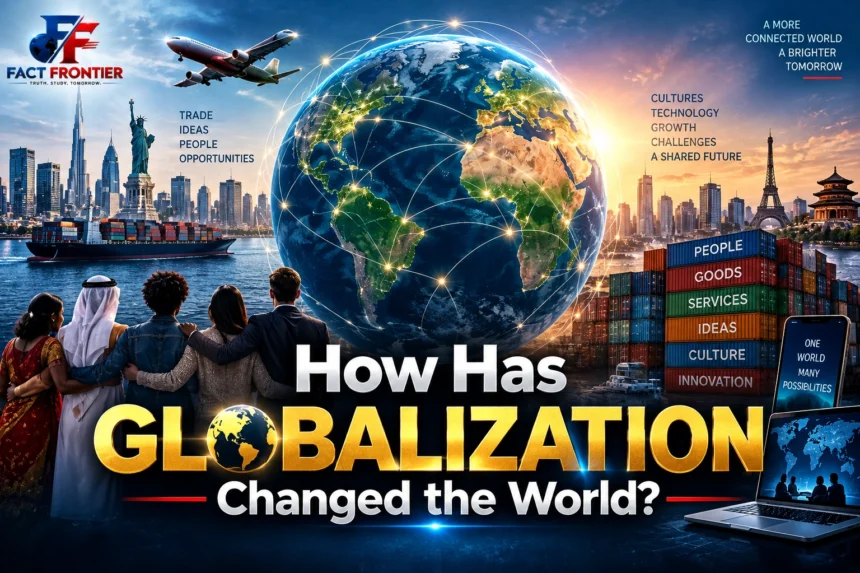
A product designed in California may be assembled in Vietnam using components manufactured across multiple continents and delivered to a buyer in India within days. To understand how globalization changed the world, one only needs to look at this modern supply chain: an intricate web where goods, capital, digital data, and people cross borders faster than at any point in human history. Globalization has not simply made nations closer—it fundamentally transformed how economies produce, how cultures interact, and how governments balance national security with global interdependence.
This is the world globalization has helped create.
Globalization has connected countries more deeply than at any previous point in history. Goods, money, technology, information, ideas and people now move across borders with remarkable speed. Yet globalization is not simply a story of countries becoming closer. It has changed the way economies work, how cultures interact, where companies invest, and even how governments think about national security.
The result has been both impressive and complicated.
Globalization has created opportunities for growth and innovation, but it has also exposed inequalities and created new forms of dependence. In the 2020s, the world is discovering that globalization is not disappearing. It is changing shape.
From Distant Markets to a Connected World
Trade between different civilizations is not new. Ancient merchants travelled along the Silk Road, while ships carried spices, textiles and precious goods across oceans. However, the modern form of globalization developed much more rapidly after the Second World War.
Advances in shipping, aviation and telecommunications made international connections cheaper and faster. Container shipping transformed global trade by allowing enormous quantities of goods to move efficiently between ports. Later, computers and the internet changed the movement of information.
Companies no longer needed to manufacture every part of a product in one country.
A business could design a product in one location, obtain raw materials from another, manufacture components elsewhere, and sell the finished product worldwide.
This created the modern global supply chain.
For consumers, globalization made foreign products increasingly accessible. Clothing, electronics, cars and food that once seemed exotic became ordinary parts of daily life.
But this convenience came from a complex international system that connected factories, ports, warehouses, banks and workers across continents.
Globalization Changed the Way Economies Grow
One of globalization’s biggest effects has been the expansion of international trade.
Countries increasingly focused on industries where they had particular advantages. Some became major manufacturing centres, while others specialised in technology, financial services, energy or agriculture.
This international division of production helped companies reduce costs and expand into new markets.
China’s economic transformation is one of the most visible examples of globalization’s impact. Its integration into global manufacturing networks turned the country into a major production centre for the world.
Other Asian economies also became important parts of international supply chains.
India experienced globalization differently. Economic liberalisation increased international trade and investment, while the country’s large pool of skilled workers helped expand sectors such as information technology and business services.
Indian companies began operating internationally, while global companies increased their presence in the country.
Globalization did not affect every country equally, however.
Countries with stronger infrastructure, better education systems, and stable institutions were often better positioned to benefit from international investment. Others remained dependent on exporting raw materials or struggled to compete with larger economies.
This difference remains one of globalization’s central challenges.
The Global Supply Chain Revolution
Perhaps nothing represents modern globalization better than the global supply chain.
A smartphone is a useful example. Its technology may involve research from several countries, chips manufactured in specialised facilities, rare minerals extracted elsewhere, and final assembly in another country.
The finished device may then be shipped around the world.
This system can be extremely efficient.
Companies can obtain materials and components from locations where they are produced most effectively. Consumers can access products that would otherwise be expensive or unavailable.
However, recent years have also shown the weaknesses of this system.
The COVID-19 pandemic disrupted factories, ports and transport networks around the world. Shortages of medical equipment, computer chips and other essential products revealed how dependent countries had become on international supply chains.
Geopolitical tensions and trade restrictions have created additional pressure.
Companies are now reconsidering where they manufacture products. Instead of depending heavily on a single country or region, many businesses are attempting to diversify their supply chains.
This does not necessarily mean globalization is ending.
It means globalization is becoming more cautious.
UN Trade and Development’s 2026 assessment describes international investment as increasingly concentrated and shaped by strategic concerns. Global foreign direct investment reached about $1.6 trillion in 2025, but the recovery remained uneven, with investment concentrated in major economies and strategic sectors. (UNCTAD)
Technology Turned Globalization into an Everyday Experience
Earlier generations experienced globalization mainly through trade and travel.
Today, technology has made it personal.
The internet allows people to communicate across continents instantly. A student in India can attend an online course created in another country. A small business can sell products internationally through digital platforms.
Social media has also created a new form of cultural globalization.
Music, films, fashion and ideas can travel across borders almost immediately. Korean entertainment, Indian cinema, American technology and Japanese animation are no longer restricted to their countries of origin.
Digital technology has made audiences global.
Artificial intelligence is now adding another dimension to this process. AI infrastructure depends on international networks involving semiconductors, data centres, software and specialised equipment.
The World Trade Organization noted that investment and trade related to AI products helped support global merchandise trade in 2025. Semiconductors, servers and other technology-related goods became increasingly important to international commerce. (World Trade Organization)
In other words, globalization is no longer only about ships carrying containers.
It is also about data travelling through cables and networks.
Globalization Changed Culture
One of the most visible effects of globalization can be seen in everyday culture.
People today encounter foreign food, music, fashion and entertainment more frequently than previous generations.
An Indian city may have Japanese restaurants, Korean beauty products, American coffee chains and European fashion brands. At the same time, Indian food, yoga, Bollywood films and Indian music have reached audiences around the world.
This cultural exchange has expanded people’s choices.
But it has also created concerns.
Critics argue that powerful global entertainment and commercial industries can weaken local languages, traditions and cultural practices. Smaller cultures may struggle to compete with globally dominant media companies.
The relationship is not always one-sided, however.
Globalization can also provide local artists and communities with larger audiences. A musician does not necessarily need a traditional international record company to reach listeners abroad.
Digital platforms have made cultural exchange more democratic, although major technology companies still control many of the platforms through which that exchange takes place.
Migration Created Global Communities
Globalization has also changed where people live and work.
Millions of people move internationally for employment, education, or business opportunities. Migration has created communities where people maintain connections with more than one country.
An engineer may work in another country while regularly communicating with family at home. Students can study abroad and later build careers in international companies.
These connections have economic consequences as well.
Migrants send money to families, transfer skills and create business networks between countries.
However, migration has also become politically controversial.
Countries often welcome skilled workers while simultaneously debating immigration, employment and cultural integration. Large movements of people can place pressure on housing, public services and labour markets.
Globalization has made movement easier in many ways, but it has also made questions about borders and national identity more important.
Who Benefited—and Who Was Left Behind?
Globalization has produced enormous economic opportunities, but its benefits have not been distributed equally.
Some workers and industries benefited from access to larger markets. Others lost jobs when companies moved manufacturing to countries with lower production costs.
In developed economies, communities dependent on traditional industries sometimes experienced unemployment and economic decline.
Meanwhile, workers in developing economies gained employment through manufacturing and global services, but working conditions and wages were not always adequate.
This is one reason globalization became politically controversial.
People often experienced globalization differently.
For a successful technology entrepreneur, international markets could represent opportunity. For a factory worker whose job moved overseas, globalization could represent uncertainty.
Both experiences were real.
The central question, therefore, is not simply whether globalization is good or bad. The more important question is how its benefits and costs are distributed.
Globalization Also Spreads Crises
A highly connected world can spread opportunities quickly.
It can also spread problems.
The global financial crisis demonstrated how economic difficulties in one part of the financial system could affect countries around the world.
The COVID-19 pandemic showed how quickly a health crisis could become an economic crisis.
Factories closed. International travel stopped. Supply chains were disrupted.
Energy markets and food supplies can also be affected by conflicts occurring far from the countries that eventually experience higher prices.
This is one of the contradictions of globalization.
Countries are connected economically, but they do not have equal control over the events that affect them.
A nation may depend on imported energy, foreign technology, or international markets. This dependence can create prosperity during stable periods but become a vulnerability during crises.
Is Globalization Now Changing Direction?
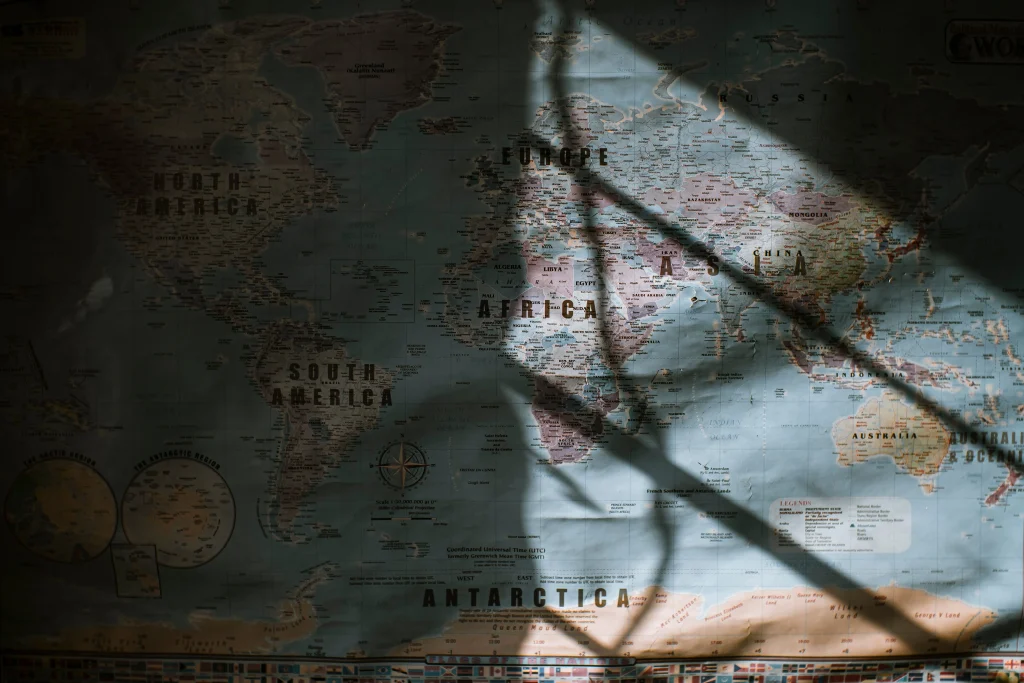
During the 1990s and early 2000s, globalization was often associated with expanding free trade and increasingly open markets.
The situation today is more complicated.
Governments are becoming more concerned about economic security. Semiconductors, critical minerals, energy infrastructure and digital technology are increasingly viewed as strategic assets.
Countries want access to international markets, but they also want greater control over essential industries.
This has encouraged ideas such as reshoring, nearshoring and “friend-shoring,” where companies move production closer to home or toward politically aligned countries.
UNCTAD has reported that international investment and supply chains are increasingly influenced by geopolitical tensions and strategic industrial policies. At the same time, digital infrastructure and AI-related investment have become major forces in the global economy. (Investment Policy Hub)
So the future may not involve a completely borderless world.
Instead, the world could become more regional while remaining deeply interconnected.
The Environmental Side of Globalization
Globalization has also increased environmental challenges.
International production and transportation consume energy. Growing consumption can increase pressure on natural resources.
At the same time, globalization has helped environmental technology spread.
Solar panels, electric vehicles, renewable-energy equipment, and scientific knowledge can move between countries much faster than in the past.
Climate change itself demonstrates why international cooperation matters.
Carbon emissions produced in one country can affect the global climate. No country can solve the problem completely on its own.
This makes environmental cooperation one of the strongest arguments for international collaboration.
The Future Will Be More Selective
Globalization is unlikely to return to the exact form seen two decades ago.
The world is becoming more cautious about dependence.
Governments are protecting strategic industries. Companies are diversifying supply chains. Technology is creating new economic connections while geopolitical tensions are creating new barriers.
Yet the evidence suggests that international economic connections remain powerful. The challenge is no longer simply whether countries should participate in globalization.
They already do.
The real challenge is how to manage globalization in a world where economic security, technology, climate change and geopolitical competition increasingly overlap.
The next phase may therefore be less about unrestricted globalization and more about managed interdependence.
Countries will continue trading, investing and sharing technology. But they may become more selective about what they depend on and whom they depend upon.
Conclusion
Globalization has changed the world in ways that are difficult to reverse.
It has transformed trade, manufacturing, communication, culture and migration. It has created international opportunities that previous generations could barely imagine.
A small business can now reach customers on another continent. A student can learn from institutions abroad without leaving home. Technology developed in one country can influence lives around the world.
But globalization has also revealed serious weaknesses.
It has increased inequality in some places, created economic insecurity for certain workers, and made countries vulnerable to disruptions beyond their borders.
The world has learned that efficiency is not always the same as resilience.
As globalization enters a new phase, the goal cannot simply be to create more connections.
The more important task is to build better ones.
Connections that are economically productive, technologically secure, environmentally sustainable, and capable of benefiting more people.
Globalization connected the world.
The challenge of the coming decades is deciding what kind of connected world we want to build.
Frequently Asked Questions
Q1.How has globalization changed the world economically?
Globalization transformed world economies by dispersing production across specialized international networks rather than keeping manufacturing within single countries. It allowed businesses to cut production costs, granted consumers access to affordable imported goods, lifted millions out of extreme poverty in developing markets, and turned nations like China and India into global manufacturing and technology hubs.
Q2.What are the main disadvantages of modern globalization?
The primary drawbacks include supply chain vulnerability during crises, job displacement in traditional domestic industries, rising economic inequality, and high environmental costs from international shipping. Furthermore, hyper-interdependence means a local disruption—such as a pandemic, conflict, or financial crash—can trigger rapid shocks worldwide.
Q3.Is globalization ending or reversing?
Globalization is not ending; it is shifting from unrestricted global integration to “managed interdependence.” Driven by geopolitical tensions and supply shocks, nations and corporations are prioritizing economic resilience through strategies like nearshoring, “friend-shoring,” and reshoring critical industries such as semiconductors, energy, and medical supplies.
Q4.What is the difference between traditional and digital globalization?
Traditional globalization centered primarily on physical assets—shipping raw materials, manufactured components, and moving physical labor across borders. Digital globalization revolves around cross-border data flows, remote services, software platforms, cloud infrastructure, and artificial intelligence networks that operate instantly without physical customs barriers.
Also Read: – Overpopulation Impact on Earth: क्या पृथ्वी पर संसाधन पर्याप्त हैं?
How Does Wi-Fi Actually Work? The Technology Behind Your Internet Connection
📚 Verified Research Sources & Fact-Checking Citations
At FactFrontier, every claim is cross-referenced with primary scientific databases, institutional research archives, and verified historical records:
- Nature & Scientific American Archives: Peer-reviewed science and interdisciplinary research publications.
- Encyclopaedia Britannica & Academic Repositories: Verified historical and encyclopedic reference data.
- Global Scientific Fact-Checking Networks: Primary institutional datasets and peer-reviewed literature.