
A Virus That Changed Global Public Health
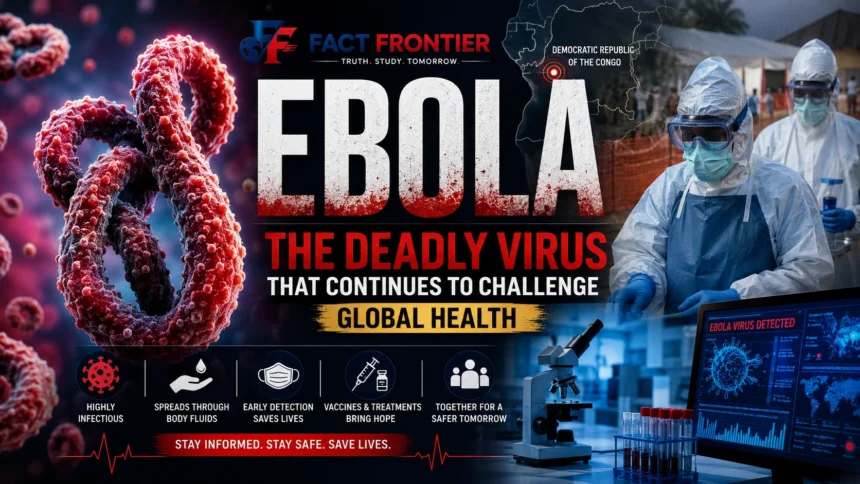
Few infectious diseases have captured global attention as intensely as Ebola. Unlike viruses that spread quietly through communities, Ebola often appears suddenly, causing clusters of severe illness that demand an immediate public health response.
Images from outbreaks in Central and West Africa—healthcare workers in full protective suits, emergency treatment centers, and communities under strict surveillance—have become symbols of how dangerous emerging infectious diseases can be.
Despite its frightening reputation, Ebola is not easily transmitted through the air like influenza or COVID-19. Instead, it spreads through close contact with infected body fluids. This distinction is important because it explains why rapid isolation, contact tracing, and infection-control measures are so effective in stopping outbreaks.
More than four decades after it was first identified, Ebola remains one of the world’s most closely monitored viral diseases. Scientific advances have dramatically improved diagnosis, treatment, and prevention, but outbreaks continue to occur, reminding the global health community that vigilance remains essential.
What Exactly Is Ebola?
Ebola is a viral hemorrhagic fever caused by viruses in the genus Ebolavirus, part of the family Filoviridae.
The disease is officially known as Ebola Virus Disease (EVD).
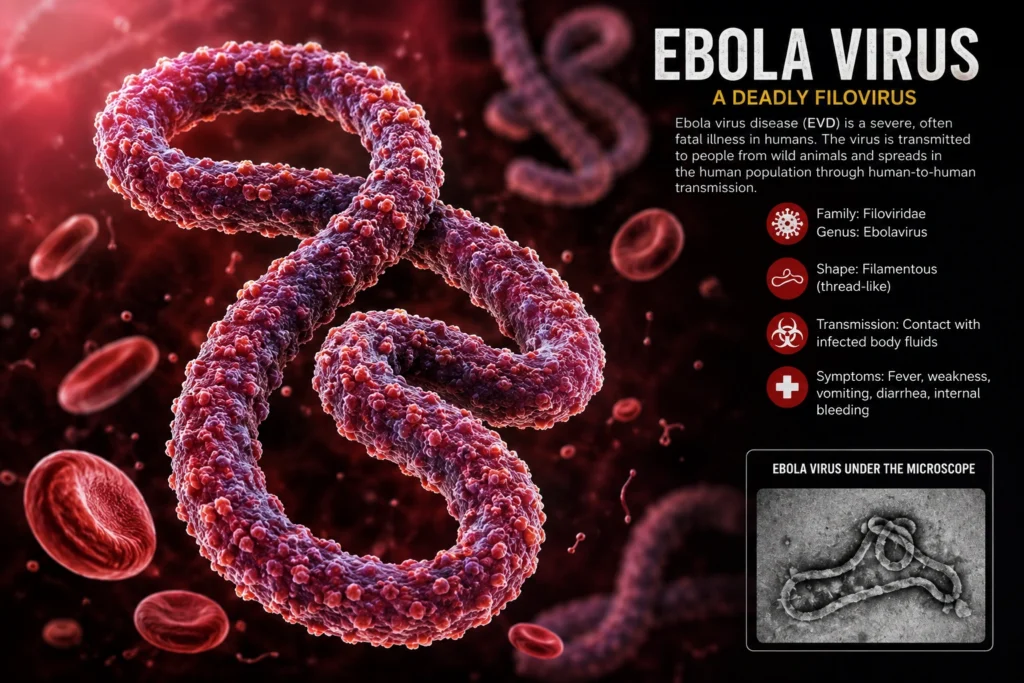
Once the virus enters the body, it attacks multiple organs and interferes with the immune system’s ability to fight infection. It can also damage blood vessels, causing fluid loss, organ dysfunction, and, in severe cases, bleeding complications.
Not every patient experiences bleeding, despite Ebola often being described as a hemorrhagic fever. Modern clinical studies show that high fever, weakness, vomiting, diarrhea, and dehydration are more common early features than dramatic bleeding.
Without prompt medical care, severe Ebola can become life-threatening within days.
Where Did Ebola Come From?
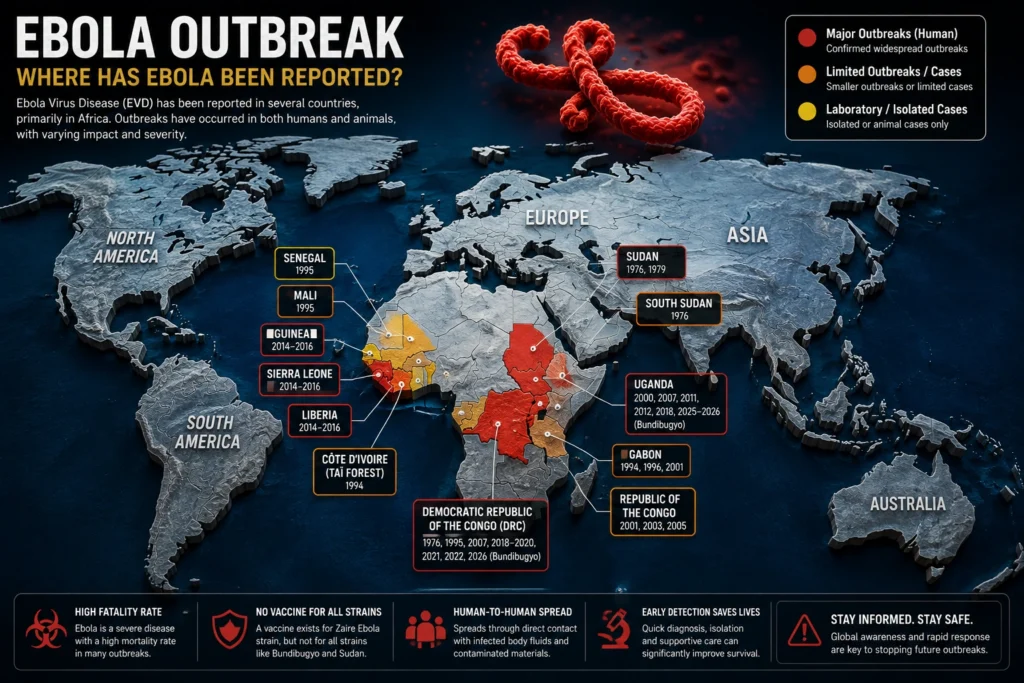
Ebola was first identified in 1976, when two separate outbreaks occurred almost simultaneously.
One outbreak affected Nzara in what is now South Sudan, while another occurred near the Ebola River in what is now the Democratic Republic of the Congo (DRC).
It was the second outbreak that gave the virus its name.
Scientists believe fruit bats are the most likely natural reservoir of Ebola viruses. The virus can occasionally spread from infected wildlife—such as bats or non-human primates—to humans, after which human-to-human transmission may occur if public health measures are not implemented quickly.
Although researchers have gathered substantial evidence supporting bats as the primary reservoir, some ecological questions remain under investigation.
The Different Types of Ebola Virus
Scientists have identified several species within the Ebolavirus genus.
Zaire ebolavirus
This is the most lethal and the best-known species.
It was responsible for the devastating 2014–2016 West Africa epidemic, the largest Ebola outbreak ever recorded.
The licensed Ebola vaccine currently available was developed primarily against this species.
Sudan ebolavirus
The Sudan species has caused multiple outbreaks over the past several decades.
Unlike Zaire ebolavirus, there is no fully licensed vaccine specifically approved for Sudan virus, although several vaccine candidates remain under clinical evaluation.
Bundibugyo ebolavirus
First identified in Uganda in 2007, this species generally has a lower fatality rate than Zaire ebolavirus but still causes serious disease.
Recent outbreaks involving Bundibugyo virus have renewed interest in developing vaccines that provide broader protection against multiple Ebola species.
Taï Forest ebolavirus
This rare species has caused only a very small number of known human infections.
Because cases remain uncommon, researchers continue studying its ecology and potential public health significance.
Reston Virus
Reston virus is unusual because it infects monkeys and pigs but has not been shown to cause illness in humans.
Although people have been exposed during outbreaks among animals, no confirmed human disease has been linked to this species.
How Does Ebola Spread?
One of the biggest misconceptions about Ebola is that it spreads through the air.
Current scientific evidence does not support airborne transmission under normal community conditions.
Instead, Ebola spreads through direct contact with:
- Blood
- Vomit
- Saliva
- Urine
- Sweat
- Breast milk
- Semen
- Other body fluids from an infected person
The virus may also spread through contaminated needles, medical equipment, or surfaces that have recently come into contact with infectious body fluids.
People become contagious only after symptoms begin.
Individuals who are infected but have not yet developed symptoms are not known to spread Ebola.
The Symptoms: More Than Just Bleeding
Early Ebola symptoms often resemble several other tropical diseases, making diagnosis difficult during the first few days.
Common symptoms include:
- Sudden fever
- Severe weakness
- Headache
- Muscle pain
- Sore throat
As the illness progresses, patients may develop:
- Vomiting
- Severe diarrhea
- Abdominal pain
- Skin rash
- Dehydration
- Liver and kidney dysfunction
In severe cases, internal or external bleeding may occur, although this is less common than many people believe.
Because these symptoms overlap with diseases such as malaria, typhoid fever, and dengue, laboratory testing is essential for confirmation.
How Doctors Confirm Ebola
Doctors cannot diagnose Ebola based on symptoms alone.
Confirmation requires specialized laboratory testing.
The most commonly used test is RT-PCR (Reverse Transcription Polymerase Chain Reaction), which detects the virus’s genetic material in blood samples.
Other laboratory methods include:
- Antigen detection tests
- Antibody testing
- Virus isolation in specialized laboratories
Samples must be handled under strict biosafety conditions to protect healthcare workers and laboratory personnel.
Rapid diagnosis allows patients to receive supportive treatment sooner and helps public health teams identify contacts before additional transmission occurs.
Source – The latest outbreak updates are regularly published through WHO Disease Outbreak News.
Why Early Detection Saves Lives
One of the most significant lessons learned from previous outbreaks is that speed matters.
Communities that identify cases early, isolate infected patients, trace close contacts, and implement safe infection-control measures consistently experience smaller outbreaks.
Advances in laboratory diagnostics, rapid response teams, and community awareness have significantly improved outbreak control compared with the early years of Ebola research.
Even so, health experts emphasize that continued surveillance remains essential, particularly in regions where Ebola viruses naturally circulate in wildlife.
Fighting Ebola: How Treatment Has Changed
For many years, Ebola was viewed as a disease with very few medical options. Doctors could provide supportive care, but there were no approved vaccines and no specific antiviral treatments. Survival often depended on how quickly patients received medical attention and how well healthcare teams could manage dehydration, organ failure, and other complications.
That picture has changed significantly.
Today, patients diagnosed early have a much better chance of survival than they did during the first major outbreaks. Advances in intensive care, rapid laboratory diagnosis, and targeted therapies have transformed the clinical management of Ebola Virus Disease (EVD).
Although Ebola remains a serious illness, it is no longer considered untreatable.
What Does Ebola Treatment Involve?
Unlike bacterial infections, Ebola cannot be treated with antibiotics because a virus causes it.
Instead, treatment focuses on two major goals:
1. Supportive Medical Care
Doctors work to keep the patient’s body functioning while the immune system fights the virus.
Supportive treatment may include:
- Intravenous (IV) fluids
- Electrolyte replacement
- Oxygen therapy when required
- Blood pressure management
- Treatment of secondary infections
- Kidney and liver function monitoring
- Nutritional support
Studies have consistently shown that patients who receive early supportive care are significantly more likely to survive.
2. Targeted Antibody Therapies
Medical research has also produced antibody-based treatments designed to neutralize the Ebola virus.
Some therapies approved for Zaire ebolavirus target the virus directly by attaching to its surface proteins and preventing it from infecting healthy cells.
These medicines represent one of the biggest breakthroughs in Ebola treatment over the past decade.
However, their effectiveness depends on the Ebola species involved, which is why researchers continue developing treatments for other strains.
Vaccines: One of Medicine’s Greatest Success Stories
Perhaps the most encouraging development in Ebola research has been vaccine science.
The Ervebo (rVSV-ZEBOV) vaccine became the first licensed Ebola vaccine after demonstrating strong protection against Zaire ebolavirus, the species responsible for the devastating 2014–2016 West African epidemic.
Several countries now use ring vaccination, a strategy in which close contacts of infected individuals—and the contacts of those contacts—are vaccinated to stop transmission before it spreads further.
This approach has helped contain multiple outbreaks.
Why Some Ebola Strains Still Pose a Challenge
Not every Ebola virus behaves the same way.
The currently licensed vaccine is designed primarily for Zaire ebolavirus.
The ongoing outbreak in the Democratic Republic of the Congo (DRC), however, involves the Bundibugyo virus, a different Ebola species.
As of August 2026, there is no licensed vaccine specifically approved for Bundibugyo virus disease, although several promising vaccine candidates are undergoing clinical evaluation.
This highlights one of the biggest challenges facing Ebola research: developing vaccines and treatments that protect against multiple Ebola species rather than only one.
The Latest Ebola Situation (2026)
The world’s attention has once again turned toward Central Africa.
In May 2026, health authorities confirmed a new Ebola outbreak caused by the Bundibugyo virus in the Democratic Republic of the Congo (DRC), with linked cases reported in Uganda. The World Health Organization (WHO) classified the event as a Public Health Emergency of International Concern (PHEIC) because of its rapid spread and cross-border risk.
The outbreak has been particularly difficult to contain because it is occurring in regions affected by:
- Armed conflict
- Population displacement
- Limited healthcare access
- High population movement
- Community mistrust
- Logistical challenges
These factors have complicated contact tracing and delayed treatment for many patients.
Source – The CDC provides detailed guidance on Ebola symptoms, transmission, prevention, and treatment.
New Treatment Trials Offer Hope
One encouraging development is the speed with which scientific research has begun.
Unlike earlier Ebola outbreaks, international researchers were able to launch treatment trials soon after the outbreak was confirmed.
The World Health Organization, together with partners such as ALIMA and Médecins Sans Frontières (Doctors Without Borders), has initiated clinical studies evaluating experimental treatments for Bundibugyo virus disease.
Researchers are also studying antiviral medicines and monoclonal antibody therapies to determine whether they can reduce mortality.
At the same time, vaccine developers—including teams from Oxford University and the Serum Institute of India—have begun early-stage clinical trials of vaccines specifically designed for the Bundibugyo strain.
How Scientists Are Tracking the Virus
Modern Ebola surveillance looks very different from what existed during the first outbreaks.
Today, public health teams use:
- Rapid PCR testing
- Mobile diagnostic laboratories
- Digital contact tracing
- Geographic mapping
- Genome sequencing
- Cross-border surveillance
- Community health networks
Genome sequencing is especially important because it helps scientists monitor whether the virus is changing over time.
Health authorities are studying whether genetic changes observed during the current outbreak could influence transmission or disease severity, but no definitive conclusions have yet been reached.
Myths vs Facts
Myth:
Ebola spreads through the air like influenza.
Fact:
Current evidence shows Ebola spreads primarily through direct contact with infected body fluids, not through routine airborne transmission.
Myth:
Everyone infected with Ebola dies.
Fact:
No. Survival has improved substantially with early diagnosis, supportive care, and access to modern treatments.
Myth:
Mosquitoes spread Ebola.
Fact:
There is no evidence that mosquitoes transmit Ebola virus.
Myth:
Recovered patients can never fully recover.
Fact:
Many survivors recover completely, although some experience long-term health effects such as joint pain, eye problems, or fatigue and may require follow-up medical care.
Can Another Global Ebola Epidemic Happen?
Public health experts do not currently consider Ebola to pose the same type of worldwide transmission risk as highly airborne respiratory viruses.
However, outbreaks can still become major regional emergencies if they are not detected early.
Several factors influence outbreak control:
- Speed of diagnosis
- Isolation of patients
- Contact tracing
- Community cooperation
- Availability of healthcare workers
- Access to vaccines and treatments
- International coordination
The faster these measures are implemented, the greater the likelihood of containing an outbreak before it spreads widely.
The Future of Ebola Research
Scientists are now working toward several long-term goals:
- Developing vaccines that protect against multiple Ebola species
- Creating antiviral medicines effective across different strains
- Producing faster diagnostic tests for remote communities
- Understanding how Ebola viruses persist in wildlife
- Strengthening outbreak preparedness in high-risk regions
These efforts aim not only to reduce deaths but also to prevent future outbreaks from escalating into international emergencies.
More Than a Medical Story
Ebola is often remembered for the fear it generated, but its broader legacy is one of scientific progress.
Every major outbreak has expanded global knowledge about infectious diseases, emergency response, vaccine development, and international cooperation.
Today’s response systems are faster, laboratories are better equipped, and communities have greater access to accurate health information than they did four decades ago.
Yet the ongoing Bundibugyo outbreak is a reminder that infectious diseases continue to evolve, and global health preparedness remains essential. Continued investment in surveillance, research, and community engagement will determine how effectively future outbreaks are controlled.
Source – Africa CDC coordinates regional surveillance and outbreak response across the African continent.
Fact Box : Ebola at a Glance
| Disease Name | Ebola Virus Disease (EVD) |
| Virus Family | Filoviridae |
| Virus Genus | Ebolavirus |
| First Identified | 1976 |
| First Outbreak | Democratic Republic of the Congo & Sudan |
| Natural Reservoir | Fruit bats (strong scientific evidence) |
| Transmission | Direct contact with infected body fluids |
| Vaccine | Available for Zaire ebolavirus (Ervebo) |
| Incubation Period | 2–21 days |
| Current Concern | Bundibugyo outbreak in DRC (2026) |
Timeline of Major Ebola Events
| 1976 | First Ebola outbreaks identified in Sudan and the Democratic Republic of the Congo |
| 1995 | Major outbreak in Kikwit, DRC |
| 2007 | Bundibugyo ebolavirus identified in Uganda |
| 2014–2016 | Largest Ebola epidemic in West Africa |
| 2019 | First licensed Ebola vaccine (Ervebo) approved for Zaire ebolavirus |
| 2022 | Uganda experienced a Sudan virus outbreak |
| 2026 | Bundibugyo virus outbreak in the Democratic Republic of the Congo with international response efforts |
Key Takeaways
- Ebola is a severe viral disease caused by viruses of the Ebolavirus genus.
- It spreads through direct contact with infected body fluids rather than routine airborne transmission.
- Symptoms often begin with fever, fatigue, headache, and muscle pain before progressing to more serious illness.
- Early diagnosis, supportive medical care, and timely isolation improve patient outcomes.
- Licensed vaccines exist for Zaire ebolavirus, while research continues for other species.
- The 2026 Bundibugyo outbreak highlights the need for continued surveillance, research, and international cooperation.
- Public awareness and rapid public health responses remain the strongest tools for preventing large outbreaks.
Frequently Asked Questions (FAQs)
1. What is Ebola?
Ebola Virus Disease (EVD) is a severe viral illness caused by viruses of the Ebolavirus genus.
2. How does Ebola spread?
It spreads through direct contact with the blood or other body fluids of an infected person or contaminated materials.
3. Is Ebola airborne?
No. Current evidence shows Ebola is not spread through routine airborne transmission.
4. What are the first symptoms of Ebola?
Early symptoms include fever, weakness, headache, muscle pain, sore throat, vomiting, and diarrhea.
5. Is there a vaccine for Ebola?
Yes. A licensed vaccine (Ervebo) is available for Zaire ebolavirus, while vaccines for other Ebola species are still being studied.
6. Can Ebola be cured?
There is no universal cure, but supportive care and approved antibody therapies for certain Ebola species can significantly improve survival.
7. Where was Ebola first discovered?
The virus was first identified in 1976 during outbreaks in what are now the Democratic Republic of the Congo and South Sudan.
8. What is the natural host of Ebola?
Scientific evidence strongly suggests that fruit bats are the virus’s natural reservoir.
9. Why is the 2026 outbreak significant?
The current outbreak involves Bundibugyo ebolavirus, for which there is no licensed vaccine yet, making research and outbreak control especially important.
10. Can Ebola outbreaks be prevented?
Yes. Early detection, isolation, contact tracing, infection-control measures, vaccination (where applicable), and community awareness are essential for preventing widespread transmission.
Also Read: – Jules Bordet’s Nobel-Winning Discovery That Transformed the Understanding of Immunity
📚 Verified Research Sources & Fact-Checking Citations
At FactFrontier, every claim is cross-referenced with primary scientific databases, institutional research archives, and verified historical records:
- World Health Organization (WHO): Global epidemiological bulletins and public health standards.
- National Institutes of Health (NIH / PubMed): Peer-reviewed clinical research and human physiology studies.
- The Lancet & Nature Medicine: Biomedical review and metabolic research data.