

A Discovery That Changed Medicine
Modern medicine has dramatically reduced deaths from infectious diseases, but this progress did not happen overnight. Long before antibiotics became widely available and decades before scientists decoded the human genome, researchers were struggling to answer a fundamental question: How does the human body recognize and destroy harmful microbes?
During the late nineteenth century, bacteria had already been identified as the cause of many deadly illnesses. Yet the body’s defense mechanisms remained largely mysterious. Physicians knew that some people recovered from infections and became resistant to future illness, but the biological processes responsible for this protection were poorly understood.
One scientist helped change that picture forever.
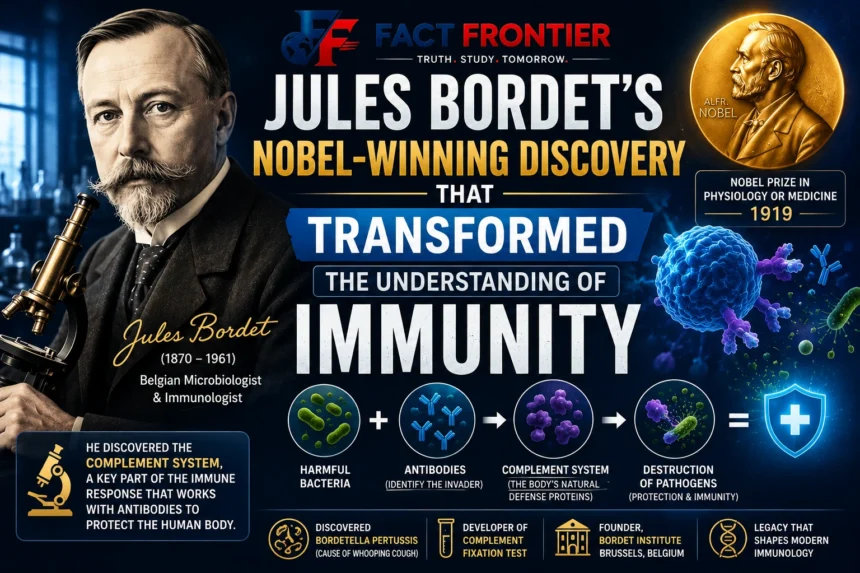
His name was Jules Bordet, a Belgian physician, microbiologist, and immunologist whose meticulous experiments revealed one of the immune system’s most important defense mechanisms. His discovery not only transformed scientific thinking but also created the foundation upon which modern immunology, vaccine research, blood testing, and infectious disease diagnostics continue to build.
More than a century later, Bordet’s work remains embedded in nearly every field of biomedical science.
Who Was Jules Bordet?
Jules Jean Baptiste Vincent Bordet was born on June 13, 1870, in Soignies, Belgium, during a period when medical science was rapidly evolving.
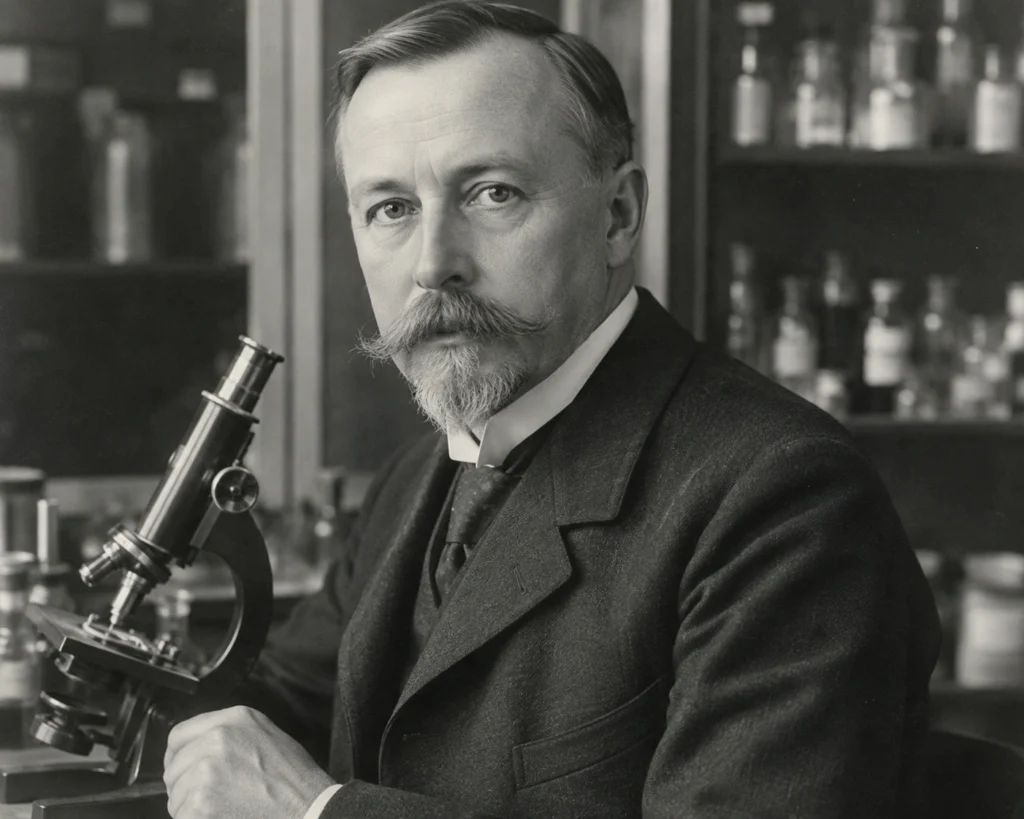
He studied medicine at the Free University of Brussels, where his fascination with laboratory research became evident early in his career. Unlike many physicians of his time, Bordet believed that careful experimentation could reveal the hidden mechanisms behind disease rather than simply describing symptoms.
His scientific abilities soon attracted international attention.
In the 1890s, Bordet joined the renowned Pasteur Institute in Paris, one of the world’s leading centers for microbiological research. Working under the influence of scientists inspired by Louis Pasteur, he entered an environment where groundbreaking discoveries in bacteriology were becoming almost routine.
It was here that Bordet encountered one of biology’s greatest mysteries: the nature of immunity.
Medicine Before the Discovery of the Complement System
To appreciate Bordet’s achievement, it helps to understand what scientists knew—and did not know—at the time.
By the end of the nineteenth century, several important discoveries had already reshaped medicine.
Researchers had demonstrated that microorganisms caused diseases such as anthrax, cholera, and tuberculosis. Vaccination had proven that immunity could be stimulated artificially. Antibodies were beginning to emerge as possible protective substances in blood serum.
Yet an important puzzle remained unsolved.
Scientists noticed that antibodies alone could not always destroy bacteria in laboratory experiments. Sometimes bacteria survived despite the presence of immune serum. At other times, they were rapidly destroyed.
The inconsistency suggested that another unknown component was involved.
No one knew what it was.
A Young Researcher with an Unusual Question
Rather than accepting existing explanations, Bordet designed a series of carefully controlled experiments.
He compared fresh blood serum with serum that had been heated.
The results surprised researchers.
Fresh serum consistently destroyed bacteria far more effectively than heated serum.
This observation suggested that blood contained two different protective components:
- One remained stable even after heating.
- The other was destroyed by heat.
That second component would eventually become one of the most important discoveries in immunology.
Although Bordet had not yet given it its modern name, he had uncovered what scientists now call the complement system.
His experiments demonstrated that antibodies were only part of the immune response.
Another group of molecules worked alongside them to eliminate invading microbes.
This finding fundamentally changed how scientists viewed the immune system.
The Beginning of Modern Immunology
Bordet’s discovery marked a turning point in biological science.
Instead of seeing immunity as a simple reaction, researchers began recognizing it as a coordinated defense involving multiple interacting components.
The complement system acts as a network of proteins circulating in the bloodstream.
When activated, these proteins help the body:
- Destroy bacteria.
- Mark harmful microbes for immune cells.
- Trigger inflammation.
- Remove damaged cells.
- Strengthen antibody responses.
Today, these functions are considered essential to the body’s innate immune system, the first line of defense against infection.
At the time, however, they represented a revolutionary new understanding of human biology.
Working at the Pasteur Institute
The Pasteur Institute offered Bordet access to some of Europe’s finest laboratories.
Here he collaborated with leading microbiologists studying infectious diseases that claimed millions of lives each year.
The institute emphasized careful experimentation over speculation—a philosophy that perfectly matched Bordet’s approach.
Rather than concluding from isolated observations, he repeated experiments under varying conditions until patterns became unmistakable.
This disciplined methodology helped ensure that his findings stood the test of time.
Many of the laboratory techniques developed during that era continue to influence biomedical research today.
Recognition Beyond Belgium
As Bordet’s discoveries gained international recognition, scientists across Europe began reproducing his experiments.
Independent laboratories confirmed that the heat-sensitive component of blood serum played an essential role in immunity.
These confirmations strengthened confidence in Bordet’s work and established him as one of the leading immunologists of his generation.
His research also encouraged collaboration between bacteriologists, physicians, and immunologists—fields that had often developed separately during the nineteenth century.
That interdisciplinary spirit remains central to modern biomedical science.
A Discovery That Continues to Save Lives
Although Jules Bordet conducted his experiments more than a century ago, the principles he uncovered remain deeply woven into contemporary medicine.
Modern vaccines, antibody therapies, diagnostic laboratory tests, and research into autoimmune disorders all rely, directly or indirectly, on concepts that emerged from Bordet’s investigations.
His work demonstrated an enduring truth about scientific discovery: transformative breakthroughs often begin not with spectacular technology, but with carefully designed questions and patient observation.
The complement system may be invisible to the naked eye, but it has become one of the immune system’s most powerful allies—and one of medicine’s greatest scientific achievements.
The Experiment That Solved a Medical Mystery
By the late 1890s, scientists had accepted that blood from recovered patients could sometimes protect others against infectious diseases. Yet no one fully understood why this protection worked.
Many researchers believed antibodies alone were responsible for killing bacteria. Jules Bordet was not convinced.
Instead of relying on assumptions, he designed a series of elegant laboratory experiments to identify every factor involved in the immune response.
His approach was simple but remarkably effective.
He compared two types of blood serum:
- Fresh serum collected directly from animals.
- The same serum after it had been gently heated.
The results were impossible to ignore.
Fresh serum rapidly destroyed bacteria. Heated serum lost much of this ability, even though antibodies were still present.
Something essential had disappeared.
That “something” would become one of the most influential discoveries in the history of medicine.
Discovering the Complement System
Bordet demonstrated that blood contains two separate defensive components.
The first was highly specific. Today we know these molecules as antibodies, proteins produced by the adaptive immune system that recognize particular pathogens.
The second component behaved very differently.
It was naturally present in healthy blood, worked against many different microbes, and became inactive when heated.
This heat-sensitive substance eventually became known as the complement system.
Rather than replacing antibodies, complement worked alongside them.
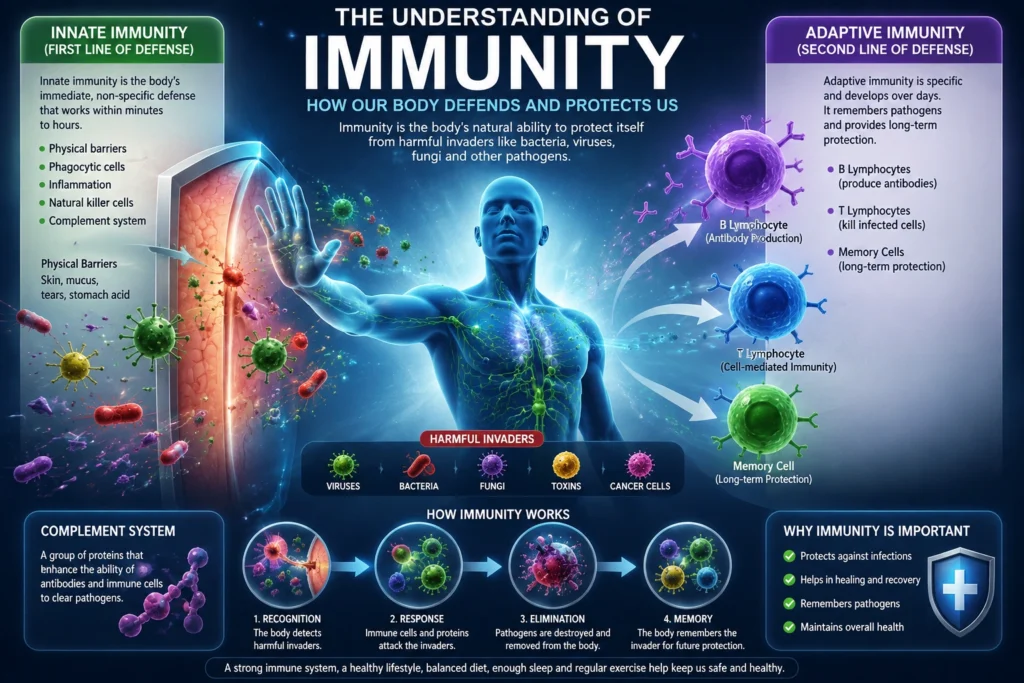
When antibodies attached themselves to invading bacteria, complement proteins became activated and launched a chain reaction that helped eliminate the threat.
This discovery fundamentally changed the scientific understanding of immunity.
How the Complement System Protects the Body
Modern research has shown that the complement system is far more sophisticated than scientists imagined during Bordet’s time.
It consists of more than 30 proteins circulating in blood and body fluids.
When activated, these proteins work together to defend the body in several ways.
Destroying Invading Microbes
Complement proteins can punch tiny holes in the outer membrane of certain bacteria.
Once these pores form, the bacterial cell loses its structural integrity and dies.
This process is known as the Membrane Attack Complex (MAC) and remains one of the immune system’s most effective weapons against bacterial infections.
Marking Dangerous Invaders
Some complement proteins attach themselves to bacteria, viruses, and other foreign particles.
This coating acts like a biological “tag,” making harmful organisms easier for immune cells such as macrophages and neutrophils to recognize and engulf.
Scientists call this process opsonization.
Although Bordet did not use this modern terminology, his work provided the foundation for understanding how it occurs.
Triggering Inflammation
Complement proteins also function as chemical messengers.
They attract white blood cells to the site of infection and increase blood vessel permeability, allowing immune cells to reach damaged tissues more quickly.
Inflammation, often viewed as an unpleasant symptom, is actually one of the body’s earliest protective responses.
Clearing Cellular Debris
The complement system does more than fight infections.
It also helps remove damaged cells, dead tissue, and immune complexes, contributing to tissue repair and maintaining normal physiological balance.
Antibodies Alone Are Not Enough
One of Bordet’s greatest scientific achievements was demonstrating that antibodies and complement perform different but complementary roles.
Antibodies identify the target.
Complement helps eliminate it.
This partnership explains why immune protection is so efficient.
Without antibodies, the immune system struggles to recognize specific pathogens.
Without complement, antibodies often cannot destroy microbes effectively.
Modern immunology still relies on this principle.
Beyond Immunity: The Bordet–Gengou Discovery
Bordet’s scientific curiosity extended well beyond the complement system.
Working with Belgian bacteriologist Octave Gengou, he isolated the bacterium responsible for whooping cough (pertussis) in 1906.
The organism was originally named Bordetella pertussis, honoring Bordet’s contribution.
Whooping cough was one of the leading causes of childhood mortality at the time.
Identifying its bacterial cause represented a major step toward developing accurate diagnostic methods and, eventually, effective vaccines.
Today, pertussis vaccination remains part of routine childhood immunization programs in many countries, helping prevent millions of infections worldwide.
A Pioneer of Diagnostic Testing
Bordet also contributed significantly to laboratory medicine.
Together with Gengou, he developed the Complement Fixation Test, one of the earliest reliable methods for detecting antibodies in blood.
Before modern molecular techniques such as PCR and advanced immunoassays became available, complement fixation testing helped physicians diagnose several infectious diseases.
Although newer technologies have largely replaced it in clinical practice, the test marked a turning point in diagnostic microbiology and demonstrated how immunological discoveries could be translated into practical medical tools.
The Nobel Prize in Physiology or Medicine
In 1919, Jules Bordet received the Nobel Prize in Physiology or Medicine.
The Nobel Committee recognized him “for his discoveries relating to immunity.”
The award acknowledged far more than a single experiment.
It honored years of meticulous laboratory research that had fundamentally altered scientists’ understanding of how the immune system functions.
Unlike many discoveries that gradually fade into history, Bordet’s work became increasingly important as immunology evolved throughout the twentieth century.
Today, nearly every medical student studying the immune system encounters concepts that originated from his research.
Founding the Bordet Institute
Following his scientific successes, Bordet became the founding director of the Bordet Institute in Brussels.
Established in the early twentieth century, the institute was created to advance research in microbiology, immunology, and later cancer medicine.
Over the decades, it has grown into one of Belgium’s leading biomedical research centers, combining scientific investigation with patient care.
Its continued success reflects Bordet’s belief that laboratory discoveries should ultimately improve human health.
A Legacy That Reaches Every Hospital
Few scientists have influenced medicine as broadly as Jules Bordet.
His discoveries now support numerous areas of healthcare, including:
- Vaccine development
- Autoimmune disease research
- Organ transplantation
- Cancer immunotherapy
- Infectious disease diagnosis
- Therapeutic antibody development
- Clinical immunology
- Biomedical research
Although modern medicine has introduced technologies that Bordet could never have imagined, the biological principles he uncovered remain essential.
Every advance built upon immune system research owes something to the foundation he helped establish.
From Careful Observation to Scientific Revolution
History often celebrates dramatic breakthroughs, but Bordet’s story illustrates a different path.
His greatest achievement emerged from patient observation, carefully controlled experiments, and a willingness to question accepted ideas.
He demonstrated that scientific progress depends not only on sophisticated instruments but also on asking the right questions.
That philosophy continues to guide biomedical research today.
As scientists investigate new vaccines, immune therapies, autoimmune disorders, and emerging infectious diseases, the complement system remains a central area of study—a lasting reminder that discoveries made more than a century ago still shape the future of medicine.
A Discovery That Never Stopped Evolving
More than a century has passed since Jules Bordet first demonstrated that antibodies required another blood component to destroy bacteria effectively. Yet his discovery has become even more relevant in modern medicine.
Scientists now recognize the complement system as one of the body’s oldest and most sophisticated defense networks. Rather than acting as a simple antibacterial mechanism, complement influences inflammation, tissue repair, immune regulation, and communication between innate and adaptive immunity. Research over the past two decades has revealed that complement proteins also function inside cells—a concept known as the complosome—expanding Bordet’s original discovery into an entirely new area of immunology.
From Laboratory Discovery to Modern Medicine
Today, Bordet’s research supports numerous branches of medical science.
Vaccine Development
Modern vaccines stimulate antibody production. Once antibodies recognize an invading pathogen, the complement system can amplify the immune response, making protection more effective.
Autoimmune Diseases
Researchers have discovered that an overactive complement system contributes to several autoimmune disorders, including lupus and certain kidney diseases.
Understanding complement regulation has allowed scientists to develop treatments that target specific complement proteins rather than suppressing the entire immune system.
Cancer Research
Scientists are investigating how complement proteins influence the tumor microenvironment.
Depending on the type of cancer, complement activity may either strengthen immune defenses or unintentionally help tumors evade immune attack. This has made complement biology an important area of cancer immunology research.
Precision Medicine
New generations of medicines now specifically target complement pathways for rare blood disorders, inflammatory diseases, and immune-mediated conditions.
This represents one of the clearest examples of how a basic scientific discovery made more than 100 years ago continues to improve patient care.
Latest Scientific Developments
Modern immunologists no longer view complement as merely a collection of proteins circulating in blood.
Research from the U.S. National Institutes of Health (NIH) and other laboratories has shown that complement activity also occurs inside immune cells, where it helps regulate metabolism, inflammation, and T-cell function. This intracellular system—known as the complosome—has become one of the fastest-growing areas of immunology research.
Scientists are also studying complement’s role in:
- Alzheimer’s disease
- Age-related macular degeneration
- Cardiovascular disease
- Organ transplantation
- Severe inflammatory disorders
- Rare genetic immune deficiencies
Although many questions remain, these investigations continue to expand the medical importance of Bordet’s original discovery.
Beyond the Nobel Prize
Jules Bordet received the 1919 Nobel Prize in Physiology or Medicine for his discoveries relating to immunity. The Nobel Committee recognized that his work had fundamentally changed scientific understanding of how the body protects itself against infection. His experiments demonstrated that antibodies and complement proteins work together—a principle that remains central to immunology today.
His influence extended well beyond the Nobel Prize.
Bordet identified the bacterium responsible for whooping cough (Bordetella pertussis), developed the complement fixation test for disease diagnosis, and helped establish Belgium as an important center for microbiological research.
Did You Know?
Fact 1
Jules Bordet proposed that immunity depended on two cooperating components long before scientists understood the molecular details of the immune system.
Fact 2
The bacterium Bordetella pertussis, which causes whooping cough, is named in his honor.
Fact 3
The complement system contains more than 30 interacting proteins, making it one of the most complex components of innate immunity.
Fact 4
Many modern diagnostic tests evolved from principles established through Bordet’s complement fixation experiments.
Timeline
| 1870 | Jules Bordet born in Soignies, Belgium |
| 1894 | Joined the Pasteur Institute in Paris |
| 1895–1901 | Conducted pioneering complement research |
| 1906 | Co-discovered Bordetella pertussis |
| 1919 | Awarded the Nobel Prize in Physiology or Medicine |
| 1901 onward | Founded and directed the Pasteur Institute in Brussels (later Institut Pasteur du Brabant/Bordet Institute legacy) |
| Today | Complement research drives advances in immunology, diagnostics, and targeted therapies |
Key Takeaways
- Jules Bordet transformed immunology by discovering the complement system.
- His work proved that antibodies alone cannot eliminate many pathogens.
- Complement proteins remain central to innate and adaptive immunity.
- Bordet’s discoveries influenced vaccines, diagnostics, microbiology, and immunotherapy.
- Modern research continues to uncover new roles for complement inside immune cells.
- More than a century later, Bordet’s research still shapes medicine worldwide.
Frequently Asked Questions
Who was Jules Bordet?
Jules Bordet was a Belgian physician, microbiologist, and immunologist who received the 1919 Nobel Prize in Physiology or Medicine for his discoveries relating to immunity.
What is the complement system?
The complement system is a network of proteins that supports antibodies and immune cells by helping destroy pathogens, trigger inflammation, and remove damaged cells.
Why was Jules Bordet awarded the Nobel Prize?
He received the Nobel Prize for discovering how complement proteins cooperate with antibodies to defend the body against infection.
What is Bordetella pertussis?
It is the bacterium responsible for whooping cough (pertussis), identified by Jules Bordet and Octave Gengou.
Is Bordet’s discovery still important?
Yes. Complement biology remains a major area of research in immunology, infectious diseases, autoimmune disorders, cancer, and precision medicine.
What is the complosome?
The complosome refers to complement activity inside cells, a modern research area showing that complement proteins regulate immune cell metabolism and function.
Also Read: – Ghost Particles (Neutrinos): The Invisible Messengers of the Universe
📚 Verified Research Sources & Fact-Checking Citations
At FactFrontier, every claim is cross-referenced with primary scientific databases, institutional research archives, and verified historical records:
- Nature & Scientific American Archives: Peer-reviewed science and interdisciplinary research publications.
- Encyclopaedia Britannica & Academic Repositories: Verified historical and encyclopedic reference data.
- Global Scientific Fact-Checking Networks: Primary institutional datasets and peer-reviewed literature.